Showing posts with label trademarks. Show all posts

Can We Use Cars in CD Cover Art or Movie?

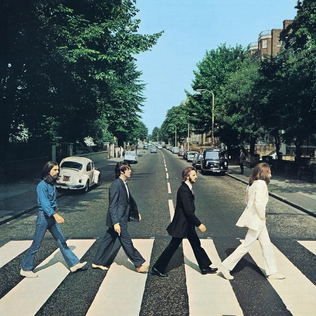
Dear Rich: On music CDs and in the movies I see images of different kinds of cars, and I wonder if the artist has had to pay any royalty to the car manufacturer. For example, the Beatle's Abbey Road album has a white Volkswagen Beetle right behind George Harrison. Does this imply endorsement of Beatle's music by Volkswagen Motor Company? And remember Walt Disney's use of a Volkswagen in the movie, The Love Bug. There are many classic old Fords and Chevys seen in movies all the time. Also, there is a musical group called REO Speedwagon. Using a car's image or trademark may (or may not) trigger problems on a CD cover or in a movie ... it depends on a few factors.
The Abbey Road Cover. The image of a VW on the Abbey Road cover (above) is unlikely to trigger any trademark issues because the usage is primarily editorial -- that is, it's an incidental use and no particular attention is drawn to the car. Of course, at the time, fans saw hidden meanings in the presence of the car (Beetle =  Beatle) but it turns out the car was simply a vehicle owned by someone in a nearby flat. (BTW, the license of the car was stolen soon after the album came out). If consumers were likely to be confused into thinking that Volkswagen (or any other car manufacturer whose vehicle appears on the street) endorsed the Beatles (or vice versa), the car company never saw fit to take action. After all, if the world's most popular band at the time is including your product on a popular album, that's not something you're likely to complain about. (In general, it was a less litigious world back in 1970.) BTW, an editorial use of a trademark -- for example, a picture of a Ford truck in a documentary about trucks -- is not infringing.
Herbie and VW Marks. As for Herbie and the Love Bug movies, Disney removed the name and logos (scroll down) from Herbie in the first movie in the series. Apparently the company was concerned about claims of trademark infringement. But several years later when the sequel appeared (Herbie Rides Again) in 1974, VW sales were down and the VW company insisted that Disney put the trademarks and names back. (The names and marks stayed on Herbie for the subsequent four Love Bug sequels.)
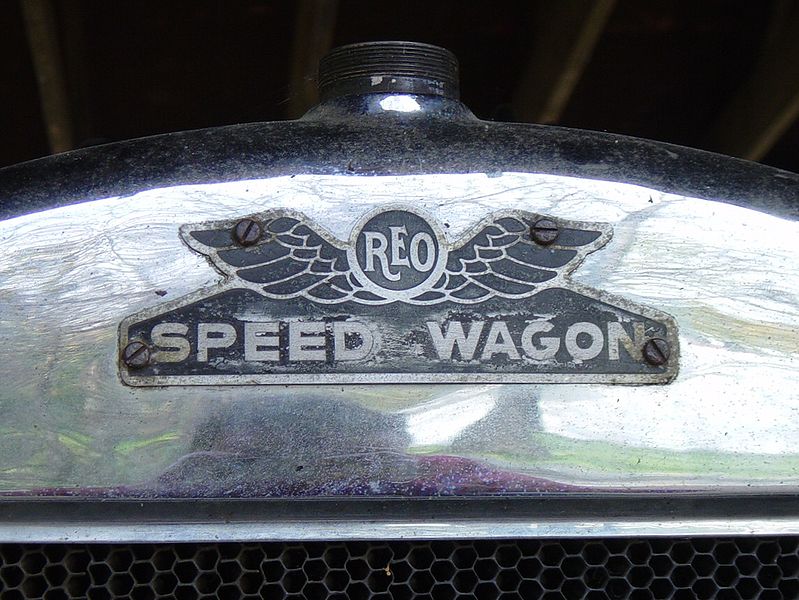
REO Speedwagon. The band, REO Speedwagon, was able to get away with using the name and logo of the REO Speed Wagon company probably because the auto company had likely abandoned any claims to the mark when it ceased production in 1936 (or some time in the later 1940s -- we're not sure) or perhaps when the later owners of the REO Motor Company declared bankruptcy in the early 1970s. An abandoned mark is free for anyone to use, although ceasing production of an automobile is not always a clear sign as to the status of the mark.
As a general rule, you want to avoid making people think the car company is affiliated or endorses your product or service -- for example, calling your band Miata -- or diluting a famous mark by tarnishing its reputation in a commercial context. However, we also note that there's plenty of leeway in these standards as the Caterpillar company found out when they tried unsuccessfully to prevent the use of their villainous tractors in a George of the Jungle movie.

Can I Sell Sports App That Uses RSS Feed?

Dear Rich: I've already made an app that feeds RSS feeds from SkySports and goal.com. The app informs people on the go about their football team. I'm about to change the app slightly and putting more work into it. I'm thinking about selling it for 1 pound. Would this be copyright infringement because I'm making a profit (or am I just feeding people the infomation from the direct source, that is, skysportsnews.com and goal.com)? Start by considering the two extremes of RSS feeds apps. On one end you have RSS reader apps like Xnews. These apps don't infringe because they are simply providing access to a variety of feeds. On the other end you may have a news app that pulls feeds from a few specific news sites and reproduces the material within the app. This is more likely to be copyright infringement because it is reproducing specific RSS feed content for readers, as well as trademark infringement because it is confusing consumers as to the source of the material. (BTW, we wrote about this issue about six months ago.) Your app seems to be somewhere in between these two extremes (and the fact that you are charging money doesn't affect the determination). The more you move away from the reader model where the user chooses the RSS feed and gets unadulterated content, and the more you hype the name of the company supplying the feed, the more likely you will run into problems. In your case, reproducing content from two specific feeds (whose trademarks are featured) could trigger a cease and desist letter.

Family Named Business Can't Always Use Family Name

Dear Rich: Our family has had a restaurant business since 2003 and recently we got a letter from a large chain asking us to change it because their lawyers say it is too similar to the chain's trademark. I don't know how they found out about us. We're a pretty small operation. Can they really make us change our restaurant's name? We're sorry to report that -- depending on the circumstances -- you may have to change your name. We've written an article on the subject of family names as trademarks so check that out, first. Assuming the chain has been using the name longer than you have, the wisest course is for you to hire a business lawyer to determine your response.
P.S. Speaking of restaurants, here's an adventurous desert we recently ordered at our local seafood shack -- Chocolate ganache wrapped in filo topped off with peanut butter sauce and hot fudge. It was great!

Can Scouting Group Claim Color Scheme?

Dear Rich: Frontier Girls is a scouting style program founded in 2007 for girls. It has come to my attention that the uniforms I use in Frontier Girls are the same color scheme as a single level of American Heritage Girls, another scouting style program founded 1995. American Heritage Girls has a total of five levels and at one level the uniform is navy bottoms, white shirts, and red vests. It is similar to Frontier Girls except American Heritage Girls also has a navy scarf with their uniform. The badges, awards, and layout of the vests are completely different as is the shape of the vest. [Compare them: American Heritage Girls Tenderheart (scroll down) vs. Frontier Girls.Their other four levels of uniforms look nothing like Frontier Girls. I have been told that I need to change my uniform, but do not feel that anyone should have the right to trademark the colors red, white and blue, as these stand for our country and any patriotic groups should have a right to use them. Are you being told to change your uniforms, solely on the basis of the color scheme, or are you being told to change on the basis of the overall appearance -- the colors, shape, and design (or what we call trade dress)? There's a difference, as we explain below. In general, the Dear Rich Staff thinks that American Heritage Girls has some challenges ahead if it drags you into court.
  • Claiming Color schemes as a trademark is tough.  In order for American Heritage Girls (AHG) to prove that Frontier Girls (FG) infringed solely on the basis of the color scheme, AHG would have to prove that their use preceded FG, that consumers of scouting-style services associate AHG with red, white and blue, that the colors are not functional, and that FG's color scheme is substantially similar to AHG such that consumers are confused when seeing a FG uniform and believe it is AHG. Proving these claims requires substantial evidence -- for example, consumer surveys and expert testimony. We think it will be hard for AHG to claim the color scheme as protectible.
  • Trade dress is also tough to protect. AHG may seek to stop FG based on their overall trade dress -- the total appearance of their uniforms (not just the colors). For example companies such as Re/Max and Bank of America go after red, white and blue competitors but usually only if the overall appearance of the signs or marks is similar (not simply the colors). AHG features at least five different uniforms in their program. So it may be a challenge for them to prove that consumers associate any one of the five as a specific source identifier. In addition, as you point out, AHG's blue "neckerchief" distinguishes the AHG uniform, somewhat, from the FG uniform. 
  • Bad publicity. It's possible that the potential headlines -- "Scouting Group Claims Exclusive Rights to Red, White and Blue" -- might dissuade AHG from seriously pursuing the claim.
  • Dilution, anyone? In addition to claiming infringement, AHG can make a dilution claim regarding the colors if it can prove that red, white and blue comprise a famous mark for AHG and that the colors are not functional. We think that's a tough claim to make as well.
For your FYI Dept. AHG has not registered their trade dress or color scheme. They have only registered their name (claimed for "Educational services, namely, conducting workshops, courses of instruction and day and overnight retreats for girls and young women that support traditional values of God, family and country to promote leadership, social, physical and intellectual development.") And they've been using that mark since 1985. That makes them trademark newbies when compared to the Boy Scouts.

Using 70's Voice Over in New Music Track


Dear Rich: I'm in the final stages of producing a music single. In the song I've sampled the voice-over of a 1970's TV ad. The voice-over is of a familiar and famous figure from that period. Would I need to clear this and for this purpose with whom, as I assume in this case that no record company or music publisher would be involved. We're not sure which familiar and famous person's voice-over you're using but if you're creating a second single, you might want to consider a classic 70s TV ad in which a size-challenged nautical figure -- perhaps a descendant of this character -- rides around in a boat in your toilet and urges consumers to pollute the waters with blue chemicals. How '70s is that?
Right you had a question. You're correct that you wouldn't need to clear the voice-over recording with a music publisher or record company. You may not need any permission at all, as explained below, but there are three possible legal rights you need to consider:
  • the copyright on the commercial. The most likely permission needed is that of the copyright holder -- that's likely to be the ad agency that created the commercial, or the company whose product is featured in the commercial. The copyright owner would own rights to the text of the commercial and to the audio. You wouldn't need permission if you claimed fair use (which can always be a bit tricky). And you probably wouldn't need to bother with permission if the company holding copyright had disappeared and you couldn't track down a successor. (And of course, you wouldn't need permission if your song had limited appeal and was unlikely to be heard by anyone connected with the copyright owner -- what we call the "tree falls in the forest" theory.)
  • the use of the famous figure's voice.  If the familiar and famous person's (FFP) voice is recognizable and listeners think that it is being used for purposes of endorsement, the FFP might have a claim based on the right of publicity. We wouldn't worry about this too much because the FFP's ROP probably won't be triggered unless the song is used for a 3rd party commercial purpose -- that is, it's licensed for use with another product or service (This article provides a short ROP summary). 
  • trademark rights. If the product name (the subject of the commercial) is included in your song, that might trigger claims of dilution or infringement but both of these claims are unlikely to succeed as use of trademarks is permitted for informational (or editorial) uses such as songs. One judge characterized the conflicting interests of the parties "Speech-zilla v. Trademark Kong.


Can I Use 'Fortune 500' ?

Dear Rich: I am working on a research project about architecture and Fortune 500 companies. I want to publish my research but would like to learn more about trademark and copyright. The questions I have are the following: Can I use "Fortune 500" in the name of my book? Do I need permission from Time Inc? Can I use a company's name from the list of "Fortune 500" in my book? Do I need permission from Time Inc. and/or each listed company?I have made original architectural drawings that contain the logo of the company and the design of their existing space, such as McDonald's. Do I need permission to publish my drawing? Here we go: 'Yes ' you can use Fortune 500 in your book title. We found at least eight books that made similar uses from dating as a business strategy to spirituality in marketing. Avoid duplicating the Fortune font and logo. And, no, you don't need permission from Time Inc. Yes, you can use a company's name or logo in your book without permission because your work is "informational." For the same reason, you can publish company logos and your drawings of the buildings - yes, buildings can be the subject of trademark protection. Buildings are also protected by copyright law, but not if they were created before 1990. Even with that protection you can take photographs or make other "pictorial representations" of post-1990 buildings. So you're good to go all around


Can I Reproduce Magazine Cover When My Product Is Featured?

Dear Rich: My product has been recently featured in a national magazine along with my company name. I've asked the magazine's permission to use their magazine name and the pictures that display my product, but they haven't responded. Could I use a picture of their magazine cover and state that my product was featured in their magazine on my ecommerce site without their permission? Wow, congratulations on getting some serious inka-dinka-doo and good luck with your product sales. Reproducing the magazine cover without permission is most likely an infringement of the copyright owned by the magazine, the cover artist/photographer, or both. But there are ways you can use it that can seriously lower your risks.
Copyright issues. The safest use (and one that would likely be excused) would be to use a thumbnail of the magazine cover -- something in the ballpark of the illustration size above. Recent cases have considered thumbnails as permissible fair uses, including a case in which magazine covers were used in a book. You can probably even claim fair use successfully using larger sizes, though we must always remind readers that fair use is a defense that you have to prove in court (a scary proposition). You can also consider another factor that we mention to Dear Rich readers. Will the magazine find out about your use and will they care? Obviously -- based on the zillions of unauthorized reproductions of product reviews -- many people in your position take this "stop me if you don't like it approach."
Trademark issues. We know that the writer of the magazine article endorsed your product (Yay!) but that doesn't necessarily mean that the magazine endorses your product and it may have a policy that asks readers not to associate the magazine's name with product or service advertising. Other magazines may have a policy prohibiting use of the logo or other trademarks in advertising. Check out the magazine's trademark rules (usually posted at its website or within the magazine) and look for any blanket prohibitions. As a general rule you should be okay with straight informational statements like "Our cool binoculars were mentioned in Bird Magazine and the writer called them "extraordinary." (You can probably include a few lines from the review without running into copyright problems.)

Will an Intent-To-Use Trademark Application Stop Theft of TM?

Dear Rich: Can I go ahead with website use and can I pitch an idea to licensing companies if all I have done is file an intent-to-use application at the Trademark Office? Is it considered intent-to-use if you don't plan on selling something yourself but you plan on licensing it? Short Answer: In your first question, we think you're asking whether there is a risk in using or exploiting your trademark while it is the subject of an intent-to-use (ITU) application. No, there's no risk ... in fact that's what you should be doing, assuming your uses match the goods and services in your ITU application. As for your second question, it will be considered an appropriate ITU if you plan on licensing it provided you can demonstrate your intent, as discussed in this article (and below)
No secrets with your ITU.  Keep in mind, there's nothing confidential about the ITU filing. Your advantage for trademark purposes is that you have priority based on your date of filing -- in other words, you can stop later users. As you're aware, the ITU application will only ripen into a trademark registration once the mark is used in commerce. So reserving the mark is a good idea but it will have no value if you can't demonstrate your use on the goods or services.
How do you show bona fide intent?  You can't simply list a group of goods and services in your ITU and expect that the USPTO will allow you to endlessly renew your ITU application. At some point, absent actual use, you will have to prove that you have a bona fide intent (BFI) to use the mark in commerce in the manner described in your application. Documentation is the key to proving your BFI. This documentation should be in the form of business plans, correspondence, product or service research, market research, manufacturing activities, promotional activities, steps to acquire distribution or licensing, expenses incurred towards your goal, and similar evidence. In addition, your BFI must exist for all the goods and services named in your application.
What's the TTAB have to say? The Trademark Trial and Appeals Board (TTAB) has held that "the absence of documentary evidence on the part of an applicant regarding such intent is sufficient to prove that the applicant lacks a bona fide intention to use the mark in commerce as required by Section 1(b)," Commodore Electronics Ltd. v. CBM Kabushiki Kaisha  26 USPQ2d 1503, 1507 (TTAB 1993). Our friends at the TTABlog have provided numerous examples of how these ITU cases play out at the TTAB. Check them out hereherehere, and here.

Wants to "Own" Shakespeare Phrase for Merchandise

Dear Rich: I have a plan to use a "theme" idea involving stories that were told to me by friends of mine at a retreat. I would use these stories in a book and title it with a quote from a Shakespeare play that fits the subject matter very well. I recorded and transcribed the stories and prepared the book proposal. I received permissions from the original participants and have developed stories beyond original telling and will use pseudonyms for the participants. My questions: (1) Can I use the Shakespeare phrase as title of book, in logo and brand, on cards, plaques, and entire product line? I searched the trademark database for phrase and there were no results. I grabbed .com domain name with phrase and there were no other domains using the phrase. (2) What do I need to do to "OWN" that phrase so that I can feel free to license it to appropriate product partners, or to enter into strategic partnerships with various companies to create gift packets with book and products, like candy and greeting cards. I also want to take the idea on the road to gather more stories after my website will launch and then once the book is published as the part of the book tour. (3) Do you think that I need a lawyer to guide me through these early stages so that the correct and necessary legal infrastructure is set in place to allow for graceful launch of this commercial universe? If so, do you have any referrals? 
All that glistens is not gold. Your plan is admirable and ambitious but we're always a little wary of attempting to plan the launch of a commercial universe all at once. We think it's usually better to take it step by step and see what works and what doesn't. With that caveat in place, here are the answers to your questions.
Good enough to call your own.  The idea of "owning" a Shakespeare phrase for merchandise is possible but it requires money and diligence. As you're aware, "ownership" of the phrase would require that you acquire trademark rights. (And as with all intellectual property rights, your claim will only have value if you have the money to go after those who infringe your trademark.) For each class of merchandise, you will need to register a trademark claim (between $275 and $325 per class, depending on how you register). So, candy would be in one class, greeting cards another, etc. By the way, if you register the phrase for greeting cards, that would give you the right to use the phrase for a line of cards; it wouldn't guarantee your exclusive right to use the phrase as the card's message. You can get the trademark registrations only by using the mark on the goods in commerce -- that is, you'll need to be selling the goods to get the rights. However, you can reserve the mark by filing an intent-to-use application, provided you have a bona fide intent to use the marks on the goods. Also, you cannot get trademark rights for a single book, but you can get it for a series of books.
What's in a name? As for using Shakespeare quotes for a book title, no problem, though you might want to check this site to avoid any confusion.
Let's kill all the lawyers. As for your last question, the Dear Rich Staff cannot refer you to any attorneys although there are many online sources for locating attorneys (including our employer's legal directory). As for doing the legal work yourself, that's always possible. Publishing the book won't bring up many legal issues and it sounds as if you have the necessary releases. More can be found in our Getting Permission book. As for the licensing deals, those probably will involve a lawyer and we would recommend contacting one once you have a solid offer in hand.

Can I Expose Exxon in My Documentary?

Dear Rich: I am making an independent film about life on our ranch with ExxonMobil. I had a blog for a few years and youtube page. For three years, I filmed lots of Exxon activities on the land that is owned by my husband. About a six months into my blog writing, ExxonMobil sued me for tortious interference saying "my shenanigans raised their operating costs" because they had increased inspections from regulators. So, I am aware of how they can be big bullies with their lawyers. However, when I was not intimidated, they just backed off and I kept filming and writing. I never got any releases from Exxon workers or subcontractors but I have the permission of the land owner (my family). Of course, everything has Exxon stickers, etc. I even interview the people working there. Exxon's partners (El Paso Corp) sued me for tortious interference and exposing trade secrets on my blog. But, we made an agreed judgement where those claims were dismissed with prejudice. I am planning to make my movie free and put it on iTunes and the Internet. I have this idea that free speech is more protected than commercial speech. But, I don't know if that is true and where I got this idea. I also think that people are less likely to sue me if they think there is no money in sales to fight over. What do you think? We admire anyone who has something to say and doesn't let other people stop them from saying it. But we're also protective of anyone who calls themselves a Dear Rich reader, so we'll provide the legal rules with a caveat that you're already probably aware of --  free speech will protect your rights, but proving you have those rights may prove to be a burden. There is some recent good news for you. Last month, Texas passed its version of an anti-SLAPP law (as explained here). Anti-Slapp laws even the playing field by stopping lawsuits that are used to censor speech. That law could prove helpful if the claims brought against you are trivial or have no legal basis. Anyway, here are the legal rules.
  • Copyright - Because you did all the filming, we don't see much of an issue with copyright. If you are quoting from Exxon's written materials, using their photos, or video, that's an infringement but we think you have a strong fair use claim. However, as we always note, fair use can only ultimately be excused by a court which means you're spending money on lawyers.
  • Trademarks - We don't see much in the way of trademark issues. The reproduction of trademarks in an informational film about Exxon is permitted under first amendment principles and we discussed those issues here. These rules regarding informational uses would protect you against claims for trademark infringement and trademark dilution. Our only suggestion would be to avoid modifying the logos.
  • Privacy/Publicity Rights - Because your film is a documentary (and it's not a commercial endeavor), you may be able get away without releases as you are skirting right of publicity issues. However, without a release, the people portrayed in your film can possibly argue the film violates their right to privacy, or alternatively, it defames them. These aren't likely claims if you make a fair factual film, but as you know, employees who are concerned about retaining employment may regret their statements or wish to recant them. In your defense, you may be able to claim that their permission is implied by the fact that they talked to you and were aware of who you were, and that the material was being filmed. (In the future, you should consider getting a video release. While the camera is rolling, explain what you're doing and what the video will be used for and ask for authorization to use the material in your film. We explain more of these releases in our Getting Permission book.)
  • Trade Secrets - You're familiar with this one. When you disclose confidential business information that you acquired by an unlawful means, a company can claim that you stole their trade secrets. So, if someone has stolen trade secrets from Exxon and they give them to you and you publish them, you could be enjoined (stopped) from distributing them. As you know, this is a gray area encouraging litigation because only a court can ultimately sort out what qualifies as a trade secret
  • Contract Claims - You're already familiar with tortious interference -- when you're accused of coming between two parties to a contract to undermine their dealings with each other -- another gray area of law in which a he said/she said battle can drag on in the courts. Your settlement agreements may also establish some contractual limitations on your future behavior (although it doesn't sound like it from your description).
  • Defamation/Trade Libel -- If you include untrue statements that cause harm to Exxon's business reputation (or to any of their executives or employees), you may expose yourself to defamation claims.
  • Likelihood of Being Sued When There are No Profits -- You asked if you were a likely target if you had no profits. Profits probably only matter when discussing copyright, trademark and contract claims. And Exxon may not care about your profits, anyway. They may be more concerned about stopping the film (getting an injunction). You could be personally liable for defamation, right of publicity or other tort claims. Some people who make documentary films attempt to shield their personal assets by creating an LLC or corporation to produce, own, and distribute the film. 

Can Apple Stop Anyone From Using the Term 'App Store?'

Can You Own a Community Event?


Dear Rich: I'm on a non-profit board that puts on a race of human powered art machines. The non-profit was formed when “ownership” of the race was tied up in litigation and the artist who started the race asked a group of his friends to find a way to keep the tradition alive. The non-profit was formed, the event name changed and now we have been putting on the race for five years. Further, the non-profit has other fundraisers it does to fund the Memorial Day race. This year the artist’s son claims, as heir to his father’s estate, he “owns” the race and sent a cease and desist letter that we were putting on “his” race illegally. He has not used the old race name in 5 years. We don’t have much money for a legal battle around this, but can find no trademarking of events or races at the USTPO. Battles over who owns festival or event rights are almost always about who owns the name/trademark. (Here's a recent example and here's one from 2010.) It's possible that other issues may arise in these disputes -- for example, contract disputes (if agreements have been made between the parties) or claims of defamation. But in general, if the dispute is about who "owns" the festival, the dispute will come down to who owns the rights to the name and logo. Event names can be registered at the U.S. Patent and Trademark Office (to see examples, visit the USPTO site, choose Search Marks, then Basic Word Mark Search and type in "festival").
What About the Artist's Son's Claims? Because you're using a different name, we're not sure what claims the son may have. The idea of "owning" the race apart from the trademark seems like a weak claim unless there's a breach of an agreement or one party has interfered with a contractual relationship. (What was the result of the litigation?).  If the son is planning to use the same name you've been using for the event, you probably have a superior claim because of your five years of use.
What about the son's five years of nonuse of the trademark? Three years of nonuse of a trademark creates a presumption that the trademark has been abandoned. At least that's the rule for federally registered marks. That's just a presumption however and if the son can prove that during the five years he always intended to resume use, then his rights to the mark will not be considered abandoned.
Takeaway points. You should file a federal registration for your trademark (probably in Class 41). Often the success of an event hinges on the organizer's relationship with the government that issues the permits and the merchants who serves as sponsors. It's possible that if you focus on these relationships and maintain your name rights, you will be able to continue without hassle from others.

Using Movie Quotes on T-Shirts

Dear Rich: I read your blog advice about the "No Soup for You" question and you stated that short phrases can't be covered by copyright. So just so I am clear, if I create t-shirts using famous phrases from movies and TV shows, I don't have to worry about a copyright infringement, as long as I don't place an image on the shirt that is connected to the movie or TV show - is that correct? That's kind of close. You probably don't need to worry about copyright claims (although some movie quotes have been protected under copyright). When it comes to merchandise and short phrases we're more concerned about trademark issues (as per our follow-up question about Seinfeld). And as Dear Rich readers know, our real concern is whether the movie company will see your work or care. If we were a betting blog, we'd bet that you'll be fine with your shirts (sans any other movie references).

Can We Use Sam's Club Photo in Manual?

Dear Rich: I have a photo of a bunch of electrical conduit inside a main electrical room at a Sam’s Club. The store manager gave the person who took the photo verbal permission to use it for educational purposes. There is no way to tell that the photo was taken inside a Sam’s Club. It’s just a bunch of nicely installed electrical conduit inside a small room. I want to use the photo in some electrician training curriculum my organization is developing, and we want to sell the curriculum to a client. Your book talks about using photos people take of trademarks but not about photos of locations that can’t really be associated with a specific trademark holder or location. If we use the photo in our curriculum are we violating copyright law? The Dear Rich Staff is wondering why Sam's Club? Is there something about the store's wiring that makes it particularly photogenic? (Alas, the nearest Sam's Club is 47.1 miles away, so we're unlikely to find out.)
Right you had a question. Yes, you are free to use the photo of the conduits. Rules about trademarks in photos only apply if a company's trademark or trade dress or some other visual identifier is visible in the photo. Even if a trademark is visible in the photo, you can still use it without permission for informational purposes such as your instructional manual. (You can even caption it as originating from Sam's Club.) You will of course need the permission of the photographer (unless the photographer is your employee or has signed a work made for hire agreement). There's also the (very) outside possibility that the electrical wiring contains a trade secret -- that is, the manner in which Sam's Club wires its buildings provides an advantage over competitors. Even if that's the case, it should not be a problem for you as the store manager has permitted the photograph; it wasn't done surreptitiously.

Naked Licensing: Not Sexy at All

Dear Rich: What is a naked license? A trademark owner who fails to supervise a licensee and maintain quality control over the licensed products or services has created a “naked license.” A naked license may cause the owner to lose rights in the mark, a process known as "abandonment." And that's exactly what happened to the family that owned the "Eva's Bridal" trademark (Eva's Bridal Ltd. v. Halanick Enter., Inc.). The family licensed the trademark to two people to open a Chicago store. After the license expired in 2002, the owners of the store continued to use the mark but stopped paying the trademark license fees. The store owners claimed that they didn't need to pay; the mark had been abandoned because the owners had not maintained quality control (it was a naked license).
High quality vs. consistent quality. The trademark owners claimed they didn't need to supervise or maintain quality control because the bridal gowns at the store were of the same high quality (and from the same suppliers) as the other Eva's Bridal shops. In other words, quality control wasn't necessary because the store's goods were of high quality. The court responded that it wasn't "high" quality that was demanded; it was consistent quality -- for example, the kind of supervision that guaranteed the dressing rooms were clean and that the customer experience was consistent across the franchise. As the judge stated (cites omitted):
The trademark's function is to tell shoppers what to expect—and whom to blame if a given outlet falls short. The licensor's reputation is at stake in every outlet, so it invests to the extent required to keep the consumer satisfied by ensuring a repeatable experience
Takeaway Points Dept. A trademark license agreement should contain language assuring quality control and permitting the trademark owner to inspect products and services -- for example, many toy licensors require pre and post production samples. In addition, the trademark owner of a franchise operation, should perform personal inspections to guarantee consistency. (BTW, some other recent naked licensing cases are discussed here.)
How many times was the word naked used in the decision? On a Beavis and Butthead level, we counted three times (and we are hoping that word drives some additional organic searches to our blog).

Specimen for Blog Trademark: What Should I Submit?

Dear Rich: I want to trademark my blog name. I went to the USPTO to file online but am confused about what I am supposed to submit as a specimen? Help, please. Hi fellow blogger! Like us, you're providing "online journal" services ... so your specimen must identify those services and it must indicate their source. The screenshot above will give you an idea of what's suitable for a blog trademark specimen because (1) it shows the URL (where to locate the services on the web); (2) it shows the mark as used in commerce (and confirms that the mark -- Dear Rich --  is the same as in the application); and (3) it shows a means for people to contact the Dear Rich Staff. (Of course, your site wouldn't include the trademark registration symbol as you can only include that after the registration is granted.) The USPTO offers more information about service mark specimens. Although you can probably manage the online registration yourself, Nolo also offers online help  for those who need a little assistance in the filing process.

Can County Hassle TV Show Over Use of Seal?

click to see gruesome details
Dear Rich: A local government watchdog group put on a cable-access TV program where they used as their logo a spotlight shining on the seal of that government (Union County, NJ). On July 1, 2010 Union County submitted an application for a trademark on their seal and soon thereafter (9/17/10) the county counsel for Union County wrote a letter to the local cable channel telling them to stop using the Union County seal on the program since a trademark was pending. The letter is here. This is now the subject of a lawsuit described here. The question: can a government even trademark their seal? First of all, you failed to mention that the Union County seal is the only government seal in the U.S. that depicts a woman being shot. We thought it was some kind of misogynistic take on the Revolutionary War but it turns out that it's based on a real event -- the killing of Hannah Caldwell, a mother and homemaker from Union. We like the native-art illustration and wonder why the County isn't pursuing copyright infringement claims as well!
Right, you had a question. As much as the Dear Rich Staff supports the right of New Jersey county officials to hassle public access TV shows, we think the matter is moot (as the lawyers like to say) because the USPTO killed the county's trademark application last week. We have to agree with the trademark examiner who rejected the trademark application on October 18, 2010. She wrote:
Registration is refused because the applied-for mark consists of an insignia of a U.S. municipality. Trademark Act Section 2(b), 15 U.S.C. §1052(b); see TMEP §1204. Trademark Act Section 2(b) bars registration of marks that include the flag, coat of arms, or other insignia of the United States, any state or municipality, or any foreign nation. TMEP §1204.
You can read the complete rejection here. The County had six months to respond. We guess their tickler system malfunctioned because last week the trademark application was officially pronounced as abandoned. Here's the notice of abandonment. That's $325  in taxpayer money (not to mention county counsel expenses) down the drain! And in any case, even if the County has a protectible but unregistrable trademark, the TV show use is permitted under First Amendment principles.

Does NFL Sticker + Lamp = Infringement?

Dallas Cowboys Glass Table
Lamp from Fansedge.com
Dear Rich: I have what I think may be a complex question and hope you can help me. Let's say I build a custom lamp and I also sell licensed NFL stickers. My question is if a customer would like to purchase a NFL sticker and have it put on the lamp, is that an infringement on the logo? Short answer: It probably depends on who places the sticker on the lamp. If you affix it, you may get a cease and desist letter from the NFL. If the customer does it, you're less likely to have problems.
Isn't that arbitrary? Yes, it is. But in the eyes of the NFL, you become a seller of NFL merchandise once you offer to sell lamps with logos on them, whether it's done at the request of the customer or under your own initiative. By selling a kit, you're less likely to run into problems --  for example, like these tail gate party kits. It's true that the NFL offers kits to create things (including pumpkin carving kits) but you're in a better position for a few reasons, including the first sale doctrine. As a general rule you should avoid including the NFL or team names in your website name or URL, and a disclaimer - "This website is not affiliated with or endorsed by the NFL" - may also help.
Bottom Line Dept. As with so many Dear Rich questions, your inquiry has a lot more to do with how visible you are on the NFL radar screen. If we were you, however, we'd still feel more secure if we were selling the parts separately rather than assembled.

Is Star Wars Blog Illegal?

Star Wars Episode 12:
Revenge of the IP Lawyers
Dear Rich: I have a blog that I recently finished called Anikin's Blog. It was a spin off of the Star Wars movie series. I was, however, afraid of copyright infringments and thus refrained from spelling any copyrighted names correctly. I want to start a new blog about a Storm Trooper, but I figure I will get more traffic if I spell the names correctly and then can receive more Google searches. Is this legal considering the blog is non-profit? Can we start by clarifying one small point? Many people write to the Dear Rich Staff and state that their business is nonprofit perhaps because they think that fact will influence whether they are liable for infringing (it won't). Many readers believe that nonprofit means that their business doesn't profit. Not true. A nonprofit has a fairly specific definition; it is a business that qualifies for certain tax benefits and has registered as a nonprofit corporation. It may seem paradoxical but a nonprofit can make a profit, provided it plows those profits back into the charitable, scientific, or educational purpose for which it was created.
Right, you had a question. We're not sure about the value of your misspelled name strategy. We don't know if it shields you from Google searches or more importantly from Lucasfilm lawyers. In any case, in light of the zillions of unauthorized Stars Wars related blogs (at least seven of which claim to be the "official" Star Wars blog), as well as the galaxies of Star Wars fanfiction, Star wars podcasts, wikis, videos, and parodies, we think that a new blog about Star Wars Storm Troopers will be flying lower than a Gungan 'Bongo' submarine on the Lucasfilm legal radar screen. In other words, don't expect a cease and desist letter in the near future. That's not to say that someday, the Star Wars legal team will decide to clean house. But as a very general rule, the attorneys appear to reserve their legal muscle to go after those who seek to profit from unauthorized Star Wars products or those with high-radar trademark violations.

Wants to Use Magazine Imagery in Book

Dear Rich: I am writing a book about an art technique using a national magazine. I can illustrate the process using the magazine without actually showing any of it's actual images, (see picture) but I must use the name as it is the only magazine that will work with this process. I have contacted the company and so far no one has been able to help me. The other product that I use has given me permission and is going so far as to help me promote the book because it will help them. This would also be the case with the magazine. I will be adding value rather than compromising it. I will list them in my sources. Would this be considered fair use? Do I need to have their permission to use their name? This reminds us of when our cousin Andrew used to paste rubber cement on a piece of wood and then apply rubber cement to a magazine picture and press them together after they dried (and I think he ran water over it until the paper washed off). He ended up with a piece of wood with an image on it, except you could see the wood grain, too. Kind of an old-timey look. He priced them at $50 or $100. We were about 13 at the time and that seemed a lot to charge for something you made with rubber cement. He told me, "If you don't charge a lot, people won't take it seriously." He was so young to know that.
Right, you had a question. We think you will be fine using the name of your magazine within your book. That's a trademark issue not a copyright issue and editorial uses of trademarks -- for example, talking about a magazine in a how-to book -- does not require permission. A conservative approach would also be to add a disclaimer at the front of the book to the effect that you and your publisher have no association with the magazine and that all rights in the magazine vest in the magazine owner. If you use imagery from the magazine, you'll trigger copyright issues and probably need permission either from the magazine or, if the magazine doesn't own the rights, from the photographer or designer who created the materials you're using. We think selective uses of the magazine in the context of a crafts project would likely be excused as a fair use since it is clearly a transformative use, but as Dear Rich readers know, fair use is just another word for a lawsuit, because that's often the only way you can prove fair use rights. As for the fact that your book adds value to the magazine, that may or may not be true, but it probably won't have much effect on your claim of fair use.