Showing posts with label registration. Show all posts

Examiner Objects to Facebook Game Trademark

Dear Rich: I need to register a trademark, which is the title of a videogame that runs on the Facebook platform. The filing was made under IC041 (Entertainment services, namely, providing on-line computer games), but when I sent over a specimen (screenshots of the game featuring the title) I was told that such a game does not constitute a "service", but rather it constitutes "goods" (video game software), thus I should better restart the filing process under IC009 (Computer game software for use on mobile and cellular phones). Am I facing a hardball attorney or are the USPTO guys right and I should restart the process? We agree with the examiner. You would use Class 009 for registering the name for a game. (You would use 041 if you were registering a website that provides the game-related services, or if you were registering the name of the company that makes the game.) The best way to avoid problems in the future is to look up similar goods and see what classes were used for those marks (or check out our book for app developers). Use the basic Trademark Search and type in the name of a video game to see its classes. For example, scroll down to see the classes sought by the Angry Birds folks.
More places to search. To identify the class for your goods, you can also search the USPTO’s Acceptable Identification of Goods and Services Manual. From the Choose Field drop-down list, pick Class, and then type in a description – for example “video game”—into the Enter Search Terms field. The search results will tell you which class is recommended. Another way to figure out which class your product falls into is to check the Trademark Manual of Examining Procedure (TMEP).

Needs Help Registering Flower Greeting Cards


Dear Rich: I myself took pictures of flowers for a set of greeting cards. All photos were taken by me during last 4 months. Some of the cards were gifts to friends, 15 were sold mostly to neighbors, and some were displayed by friends and relatives. All total maybe 150 cards (from 11 different images) were given, sold or displayed. (1) Are the photographs unpublished or published? (2) May I write “approx” nearest date of publication of some photos if I not sure about exact date? (3) Do I need two separate applications to apply for copyright for published photos and for unpublished photos. Your question inspired the Dear Rich Staff to take a picture of a lovely dahlia blooming not far from Dear Rich headquarters. Now, if only we had time to stop and smell it.
Right, you had a question(s). (1) We consider all 11 of your greeting card images to be published works because you have distributed the cards to the public by sale or with the intent to transfer ownership. (If you had only displayed the cards or given them to a select group of people with restrictions, they would be considered "unpublished.") (2) You're on the right track by adding "approx" when providing date of publication. Ifyou’re not sure,state your best guess -- for example, “October 14, 2011 (approx.).” (3) No need for two registrations. As the Copyright Office explains, you should be able to manage with one registration for a group of published photos.

How Do I Protect My Wife's Blog?


Dear Rich: My wife writes a weekly blog entry for a friend's blog which is syndicated on blogger. Her articles are well received and she has subsequently submitted different items to different trade magazines for potential publication. She currently receives no residual ad revenue from the blog's 'owner'. Should we separately 'trademark' or otherwise protect her articles under her name or company name? The concern would be that the blog owner could also submit her articles or otherwise generate separate revenue stream based on them. It is an unlikely situation, but we wanted to be educated on if and/or how to protect her writing. We've been wearing our Don't Drink and Blog T-shirt for months now (not continuously, of course) and we think it's been effective keeping drunks off of Blogspot. (We also support this Busted Tees special which made us realize how close we were to being Amish). One thing for sure, don't drive and blog.
Right, you had a question. We don't think you can acquire a trademark for the blog because we assume it's your friend's blog, not your wife's. If that's not the case, and your wife is co-owner of the name, the parties can register the blog name by following these instructions. Still, that will only get you the right to stop others from using a similar blog name; it won't give you the ability to stop copying of the blog's text.
Copyright's where it's at. Your wife already has the strongest form of protection -- copyright. She gets it automatically whenever she posts an entry. She can augment her rights by filing for copyright registration. Registration has some great benefits and soon we'll be posting an article on how to register blog articles (though this entry may help, for now). Assuming there is no written agreement to the contrary, your wife owns the copyright in whatever she creates. She impliedly gives her consent for publication in the blog, but not for anything beyond that use. So, if the blog's administrator/owner uses your wife's entries for some other purpose, your wife can legally prevent that use if she chooses to flex her copyright muscles. For the future, perhaps she may want to create a simple agreement explaining how any uses are to be handled -- that is what can be reproduced by the blog owner and her compensation for that use.

One More Time: How to Register a Blog Name

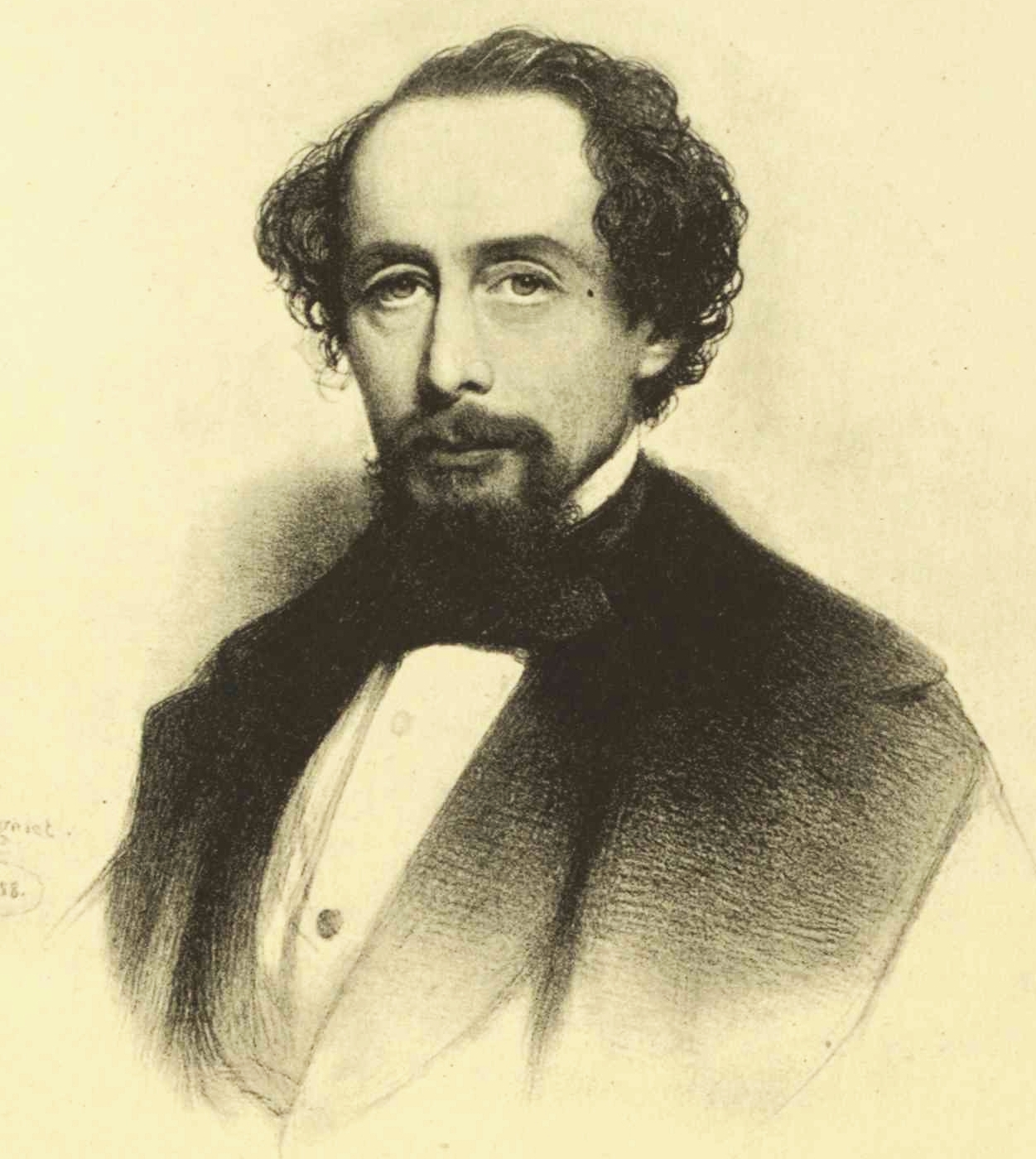
Charles Dickens:
The world's first blogger?
Dear Rich: I read your entry on whether you can register a blog name as a trademark. It's helpful but doesn't really explain how to register the name. Can you provide a step-by-step explanation for registering a blog name at the USPTO? It would be much appreciated. The Dear Rich Staff is here to serve. We posted this article explaining the registration process.

Specimen for Blog Trademark: What Should I Submit?

Dear Rich: I want to trademark my blog name. I went to the USPTO to file online but am confused about what I am supposed to submit as a specimen? Help, please. Hi fellow blogger! Like us, you're providing "online journal" services ... so your specimen must identify those services and it must indicate their source. The screenshot above will give you an idea of what's suitable for a blog trademark specimen because (1) it shows the URL (where to locate the services on the web); (2) it shows the mark as used in commerce (and confirms that the mark -- Dear Rich --  is the same as in the application); and (3) it shows a means for people to contact the Dear Rich Staff. (Of course, your site wouldn't include the trademark registration symbol as you can only include that after the registration is granted.) The USPTO offers more information about service mark specimens. Although you can probably manage the online registration yourself, Nolo also offers online help  for those who need a little assistance in the filing process.

Does Copyright Office Check for Conflicts?

Dear Rich: Are works submitted for copyright protection automatically registered, or does the copyright office check for conflicts before registering submitted materials? Unlike when you file for a patent, or a trademark, there is no "similarity check" when filing for a copyright registration. (Don't worry, we won't bore you with a long explanation as to why that is.) When an application arrives, the Copyright Office checks: (1) that the application is complete -- that is, all of the parts are there, (2) that there are no obvious errors in the application (see below), and (3) that the work being registered is appropriate "subject matter" for copyright. The best way to get an idea of what matters to the Copyright Office and whether an error has been made in the application is to review the Copyright Compendium II, the 'rule book' for Copyright Office examiners. In addition, these internal rules overlap with 37 C.F.R. Sections 201-202 (the Code of Federal Regulations). By the way, the fee for filing a paper application has risen from $45 to $50. The fee for electronic filing is still $35.

Registering Copyright for Quarterly Online Magazine

Dear Rich: I’m the editor of a magazine that migrated about five years ago from quarterly print publication to online. Initially, we updated the web site on a quarterly basis, but eventually increased posting frequency and now post content virtually every day. We still archive all content accumulated during a particular quarter by that quarter, however, and would like to continue doing so. I need information on filing for copyright registration for a “quarterly” online magazine that posts new content "virtually every day.” Any suggestions? Here at Dear Rich headquarters we like to provide clarity and a sense of reassurance in our answers. Unfortunately your question deals with some murky waters ... group copyright registrations and online publications. Partially, that's because there has been some uncertainty expressed in recent cases as to what group registrations actually protect -- the collection or the individual units of content. Then, there's the fact that the Copyright Office still hasn't taken a position as to whether an online work is published or unpublished (a fact that also affects your registration).
So what's the answer? First, you need to sort out who produced the content -- you, employees, or freelancers? If you or your employees created the works, then you are the copyright owner. If you own copyright in all content, you can register that content by following the guidelines in Circular 66. You should register the journal on a periodic basis -- perhaps timed to major article releases. (There's a saying among patent lawyers: register early and register often and that would apply to your quarterly magazine.) If you're revising the online work, and the revisions are published on separate days, the only for-sure guaranteed protection for the content is that each version of the online work must be registered individually, with a separate application and filing fee (unless it qualifies under one of the two registration exceptions set forth in Copyright Circular 66). That can get expensive at $35 per application  but in a CYA world, that's the only surefire guarantee of claiming statutory rights. Make sure to list the titles of all articles in the journal. If you don't claim copyright in individual articles, you may wish to claim the collection of articles -- not necessarily the content -- and you should consider serial registration as explained in Circular 62B. If freelancers created the articles, you don't own copyright in the individual articles unless there is an agreement in place. (If a freelancer owns copyright the freelancer should register his or her article using either the eCo system or Form CO.) Whew!
Just in case you weren't aware. Copyright registration is not essential for claiming copyright. You get that automatically. But if you want to claim statutory damages or you want a shot at attorney fees, registering the work prior to infringement is essential.

What Version Do You Deposit for Software App Copyright?

Dear Rich: We have a popular app that's gone through several versions and is available for Apple and Android platforms. We've never copyrighted the app and now we're trying to do it. We started with the electronic registration but we're confused. Do we register the current version of the program or the first version. The Dear Rich staff is feeling kind of strange these days and we're not sure whether it's world events, Liz Taylor's departure, the behavior of the tides and moon, Charlie Sheen's trademark activity, or all of the above. In any case your question triggered memories from back in the 80s when we worked for a software company that developed networking software. And one day the company's developer hooked up the software in our office and somebody in another office sent us our first message from their computer and it was just like one of those "Come here Mr. Watson" moments.
Right, you had a question. If you're concerned about infringement, you should register both the first version and the most recent version, and you should probably do the same for all platforms. Yes, it's true that you get copyright automatically once you create a work. But in reality, the copyright is not so automatic when you want to sue someone. That's because you have to file a registration before filing your suit. When completing the application, the Copyright Office rules require that you (1) list the first date of publication, (2) that you acknowledge any preexisting material that you incorporate in your version, and (3) that you deposit the best edition of the first publication. Those three criteria can cause confusion. That's because software programs (like video games and websites) go through a series of substantial changes after they're first offered to the public.
Date of first publication; preexisting material. The Copyright Office wants you to provide the date of first publication for your software program. But if you're offering a series of version, each constitutes a separate "first" publication. For example, there's a first publication for your iPod version, your iPad version, your iPod 2.0 version, your Android 3.0 version, etc. And whenever you register your work you can claim only what is new over the previous version. As a result, you must file a series of registrations as described here.
Depositing the best edition. Consider the software developer who no longer had the first published version of his source code from 1990. In order to deposit the first published version, he reconstructed it by removing all of the code he'd added since the program was first created. Not good enough said a court who claimed that reconstructions of code would not suffice. Therefore, we hope you have maintained copies of the source code for each version and you can furnish it according to these requirements. P.S. For more exciting legal info on apps, check out our O'Reilly Mini eGuide.

Using movie stills at a website

Dear Rich: I am planing to make a site that shows screenshots from the movies that I love. A movie might have 50 or so, (or even more?) screenshots in it. There will be no critics or teaching material. There might be an affiliate link to purchase movie. Of course I want them to be in good quality so these might not consider as thumbnails but not wallpaper size also. I made a quick research and have a roughly an idea what might be considered as copyright infringement. It seems like a very fuzzy area in my opinion. On one hand it is promoting the work but on the other hand copyright holders might ask for permission. History Dept. Did you know that prior to 1912, the U.S. Copyright Office did not recognize film as copyrightable subject matter? Early filmmakers had to print out every frame of the film and register each movie as a series of photographs. The law was amended in 1912 because, as a Congressional report announced, movie production, “has become a business of vast proportions.”
Yes, you're infringing. It's not really that fuzzy. Unauthorized reproductions are infringement unless excused by a defense such as fair use. You probably can't afford to fight a fair use battle, so the question you're probably more concerned about is whether movie companies will come after uses like yours. After all, a lot of websites freely use movie stills to discuss films and don't run into problems. Our suggestion: follow Aristotle's advice, "Everything in moderation." If you use two or three stills or only use thumbnails, you're unlikely to get much fanmail from movie company lawyers. But when you begin using 50 full-size images, you're more likely to show up on their radar screen.
Are you promoting the film? Many infringers argue that they're actually promoting the work they've ripped off ... and you can certainly bring that up as part of your fair use defense. But that argument rarely succeeds. First, you can promote the film without infringing copyright. Second, like many bloggers and website owners, it looks like you're really concerned with promoting your own site and earning money from affiliate sales.  Finally, copyright owners might not want to be promoted in the manner you do it at your blog. Part of the benefit of owning a copyright is that you can control, to a limited extent, the manner in which the work is promoted.
Speaking of theft ... We recently re-watched this heist film (we love Akim Tamiroff) and when we Googled it, we noted (wistfully) that the movie itself had been heisted.

Do I have to stop using networking site name?

Dear Rich: I just started a private networking site/discussion forum that members can join and talk about the trade I'm in. I gave the site a name, and was recently contacted by someone in my state that said that they have that name trademarked in the state and I cannot use it. Upon looking up their info, I see that they trademarked the name under clothing and education. I also noted that while they trademarked the name in late 2009, they haven't really done much with it - they have a website with a logo and 'coming soon' message. They also have a Facebook page with 0 followers and no activity. My website does not sell anything, it is just a discussion forum that I've started as a hobby, so if I'm reading the law correctly, I must be actually selling a good or service to be infringing on his trademark rights, am I correct? Also, if the site gets so big that it becomes costly for me to keep up, I may decide to sell advertisements to local members just to cover the cost of the site. Could I do so without any issue? If so, should I trademark the same name under "Advertising" and "Personal Services" to protect myself, or is that necessary? It's difficult to say for sure whether you are "in commerce" but we think there's a good possibility that you are, regardless of whether you make money. You are likely offering "services" whether or not you accept compensation or charge for them.  Making money probably has more to do with the issue of damages. A lot of trademark owners don't bother chasing uses like yours because if they win, there are no profits to recover in damages. (Selling ads would of course generate income that might be recoverable.)
Are you headed for a lawsuit? That depends on whether the owner is puffing or really intends to do something about your use. In your favor: you're obviously in a different trademark class (although you may overlap if your forum caters to education and fashion); and the other party's state trademark registration does not offer as much legal ammunition as compared to a federal registration. (That's because some state registration agencies don't examine applications, they just basically rubber stamp the application without much checking.)
Should you federally register your mark? When you ask about whether you should register your trademark, we assume you're referring to federal registration. If you're considering that solely to block or defend against this trademark owner, it might be too early to take that action; many trademark owners only threaten a lawsuit, and it's possible that this will all blow over. But if you're considering registration  for long term purposes -- as an investment in your activity -- then yes, definitely pursue it. (We explain some of the basics, here.) As for your trademark class, we can't tell for sure but it's most likely in one of these: 35, 38 or 42. (BTW, trademark mavens have convincing arguments that 'trademark' is not a verb.)