Showing posts with label trademark. Show all posts

Making Merchandise from Video Game Characters

Dear Rich: For a while I have been making digital merchandise based off of famous movie and video game characters. At first I wasn't really making any money off of them. I know now that not making a profit doesn't change anything as far as trademark violations, but I thought it did before, so I stopped selling the merchandise a while ago because I had started making real money and didn't want to make money off of other people's creations without their permission. But now, after so many months, I find myself still wanting to make and sell that merchandise, and other people are asking me to as well. Its a bit frustrating, because I see other people creating things based off of trademarked characters, both in my market and in other markets on the internet. Like all of the Star Trek merchandise you see on Etsy. What's the likelihood of a small one-person business like me getting permission to create merchandise like this? If it's possible, how do I do it?  The likelihood of getting permission is very slim. Owners of video game characters usually only deal with established merchandisers (with serious sales voodoo). Also, they often enter into exclusive licenses. That means they can't grant permission to you without violating their license with someone else. It's possible that if you were offering a new product category, you might have a chance. But that's tough to pull off. (PS. Here's the lowdown on trademark licensing.)
How do other people get away with it? It's a matter of odds. The owners of valuable character properties usually put their resources into pursuing the bigger fish, and for the most part, that often bypasses individual sales at Etsy or eBay. So, unless the trademark owner is intending to make an example of a small fry infringer, a cease and desist letter may be sent, and that's sometimes the end of it.
What should you do? We wish it wasn't frustrating to get permission. Like, wouldn't it be great if you could pay "per impression" for reproductions of licensed characters.  Of course, that may blow any standards of quality ... but hey, merchandise happens. Anyway, infringement is always a gamble and we'll leave the risk assessment to you.

Can Yoga Moves Be Copyrighted?

Dear Rich: I've been following the Bikram Yoga stories and it's still not clear to me. Can I practice Bikram Yoga techniques at my studio or will I get sued by the Bikram people? The jury is still out on the case you're discussing in which Bikram founder Bikram Choudhury sued a former Bikram practitioner who started a competing "hot yoga" school (Yoga To The People or "YTTP") for copyright and trademark infringement. We thought we answered a similar question a while back but we couldn't dig it up so we assume it was written in a parallel universe.
The copyright case(s).  Bikram and his competitors have been in and of courtrooms over the past ten years. One group of yoga practitioners sought relief after Bikram sent out a bunch of cease and desist letters in approximately 2002 and 2003. That battle ended in a settlement in 2005 but not before a court weighed in on a few important issues. The court determined that: individual yoga moves could not be protected; a compilation of moves might be protected if sufficient originality could be demonstrated; even if a copyright were granted for a collection of moves, it would be a "thin copyright" and would likely be limited to performing the moves in the exact sequence; and the performance of yoga moves did not necessarily amount to their publication. As for the use of heat as part of the sequence -- and who wouldn't want to be in a yoga room packed with half-naked sweaty people -- no protection can be granted for this "concept." In September of this year, Bikram started up again, this time going after YTTP for copyright and trademark infringement. Bikram has received several copyrights for books and other compilations. However, the Copyright Office announced last week that yoga moves are not eligible for copyright protection. Bikram's lawyers discounted that decision as meaningless because Bikram's copyright has already issued and is presumed valid. It's true that there is a presumption of validity associated with a copyright registration but it's a rebuttable presumption and courts periodically eighty-six registrations when the situation calls for it. This may prove to be one of those situations.
Can you use the trademark? Probably, the strongest claim that Bikram can make is for trademark rights -- specifically as to the use of the name, Bikram Yoga. Bikram hasn't made the mistake of Pilates and permitted the unlicensed use of his name. So, if he can demonstrate that the Bikram marks (and we're not sure what is claimed beyond the name)  have been used, he may be able to succeed on trademark infringement claims.
Can it be patented? We don't think a collection of yoga moves is patentable, an opinion shared by other patent practitioners and by the patent office, although it is possible to obtain patents on yoga products, like the yoga gloves and shoes, shown above). (And of course let's not make the sad journalistic mistake of confusing copyrights and patents.)
Bottom Line Dept. If we were a betting blog, we would bet that Bikram will fail in his current copyright case though we doubt if that will deter the celebrity attraction that is associated with his "brand." The takeaway point, however, is that, until stopped by a published court ruling, the company is likely to continue to aggressively "protect" its turf.


Can We Do a Book About the Rolling Stones?

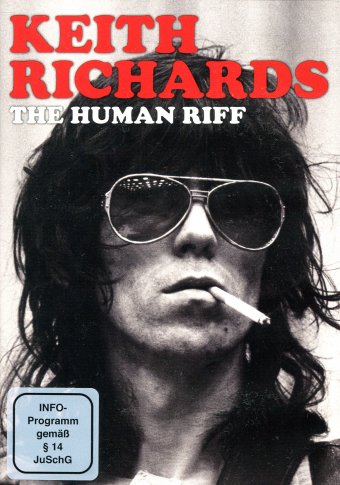
Dear Rich: I am a small publisher with a writing background who wants to release an e-book covering the 50th anniversary of the Rolling Stones. I have asked many experts three questions: who is their favorite Rolling Stone? What is their favorite Rolling Stone song? and What is a memorable experience that they had regarding the Stones and their songs? I plan to publish the findings in a e-book and sell/release it for download. My questions are: (1) Do I have to ask the band's permission to release the book? (2) If the company decides to sell the book, do we have to compensate the Stones? (3) Am I okay to publish this if I dont include any copyrighted logos/materials etc in the publication? The Dear Rich Staff has decided that its favorite member of the Rolling Stones is Keith Richards because we loved his autobiography, he set the standard for all rock and roll guitar playing, and because if we find certain old pictures of him, he kind of reminds us of the way we wanted to look back in the day. (Of course, our second favorite Rolling Stone is Charlie Watts because he is the best dresser and drummer in rock and roll.) Our favorite Rolling Stones song is You've Got the Silver because Keef sings it but if you're looking for tracks that Mick sings, then it would be Wild Horses or Angie. Our most memorable and most depressing Rolling Stones experience was the so-called "Inflatable Penis" tour in 1975. We saw the show at Indiana University Convention Center and the setlist was awesome. But it was the first tour that the Stones used props on stage and we remember thinking at the time -- maybe it was the Hoosier audience, the awful sound mix, or maybe it was the sad use of the props -- that this was the end of rock and roll. And of course, we were correct about that.
Right, you had a question. If you don't use any copyrighted materials owned by the Stones -- lyrics, photographs, etc., --  then you won't need to ask permission or deal with compensation. If you do use some limited excerpts or clips, you may be able to excuse that use under fair use principles. For example,  under U.S copyright law, you can probably get away with thumbnail reproductions of album covers as a fair use. You're probably fine to use Rolling Stones logos and trademarks because your uses are strictly information/editorial and permissible under trademark law. However, we think you are best avoiding the use of of logos (such as the logo reproduced above) on the cover of the book as that may imply endorsement by the Stones.

When is Abandoned Trademark Abandoned?

Dear Rich: I would like to use a trademark that was first used 2/2007 and has been deemed 'abandoned' since 8/2008. On your blog you note that the trademark is deemed abandoned if the owner does not use it for an extended period of time with the intent not to resume use. How can I find out if the owner intends to use it? What did the owner do/not do that caused the trademark to be deemed 'abandoned'? Thank you for your help! And thank you for triggering an ancient memory of watching "Seduced and Abandoned" in the local art theater with my dad. What a great movie -- even though it was a comedy, it was kind of scary, too.
Right, you had a question. There are three types of trademark abandonment:
  • an abandoned trademark -- this refers to the loss of trademark rights due to nonuse and it occurs when there is sufficient evidence that the owner intends to discontinue use of the mark. Under the Lanham Act, a mark registered with the U.S. Patent and Trademark Office is presumed abandoned if it is not used for a continuous period of three years or more.
  • an abandoned trademark application -- this refers to an application that is ditched during the application process.  We're guessing that's what your question is referring to because it fits best with your timeline. If you're wondering why a trademark application has been abandoned, you can do the detective work and find the reasons by checking the TARR status of the mark, or if necessary by reading through the documents you can access for free via the USPTO's TDR (Trademark Document Retrieval). This is accomplished by clicking around and reading the PDFs associated with the applicant's file. By reviewing the documents in the application file you can learn whether the applicant just ran out of steam at the USPTO or whether the  USPTO examiner had a good argument as to why the mark shouldn't be registered. Keep in mind that if an application was abandoned because an examiner objected to registration that could be a strong indicator that you will run into problems with the same mark.
  • an abandoned trademark registration -- this refers to a trademark registration that is canceled, usually because the owner failed to follow certain formalities such as a renewal. Again, you can find the reasons by searching trademark records. The most common reason is that the owner didn't file a statement of continued use, resulting in cancellation. Often it's okay to step in and begin a similar use but you should always check the marketplace to confirm that the previous owner is not still claiming rights even without the registration.
As for determining whether a company abandoned its use of a trademark, you need to do old-fashioned research. Check retail stores, search online, or -- as we used to do back in the day -- call the company and asking whether you can still buy the product or acquire the service.

Can I Get Away With Selling Counterfeit Goods?

Dear Rich: My cousin sells knockoffs from a famous fashion brand. She makes a quite a bit of money with this 'side busines's and she's offered to set me up. The initial investment is a few thousand dollars. I know it's illegal but what I'm trying to find out is the likelihood that I will get in trouble. What are the chances?We can't tell you the chances for getting caught for selling counterfeit goods. That depends on luck, geography, your online presence, whether you have any acquaintances who have a reason to turn you in, whether your supplier gets busted and decides to flip you, or whether you fall for a sting operation. The sad part of the story -- from a business plan POV -- is that the more successful you become, the more likely you will become a target of all this mishigas. We get similar questions occasionally, so we've posted an article on the subject detailing the legal rules.

Honk if You Want to Register Your Bumper Sticker as a Trademark!


Dear Rich: I am in the midst of applying for a trademark and am confused about which category in the trademark manual my item falls.  The item is essentially a slogan (code 045) which is being printed onto bumper stickers (no code found) and also onto baseball caps and hats (code 025). The intent is to expand the list of goods sold that are branded with the slogan. The bumper stickers and caps are the two initial items I will be selling. Which category I should enter on the application? We think you'll have a hard time registering a slogan with the USPTO unless you can demonstrate that the slogan is associated with a product or service -- that is, a product other than caps or bumper stickers. For example, a slogan like the one shown above would be difficult to register, as would variants such as

  • Honk if You Like Cheeses, 
  • Honk if You Would Like to See My Finger, 
  • Honk if You're Going to Run Me Over, 
  • Honk if you Like Prune Tacos (our favorite), 
  • Honk if You Like Peace and Quiet, 
  • Honk if You Are Living a Life of Quiet Desperation, or 
  • Honk if You've Never Seen a Gun Fired From a Moving Vehicle (scary). 
That's because these slogans are considered ornamental (they inspire, entertain, or amuse) or informational (they express a thought). To acquire registration they must create a consumer association with a product or service (for example, Honk if You Sell Car Horns for an applicant that sells car horns).
Honk If You Receive an Objection from A Trademark Examiner. Upon receiving an application for  a slogan, the trademark examiner will probably object on the basis of § 1202.03 or § 1202.04 of Trademark Manual of Examining Procedure or TMEP (excerpted below).

§1202.03 Refusal on Basis of OrnamentationSubject matter that is merely a decorative feature does not identify and distinguish the applicant’s goods and, thus, does not function as a trademark. A decorative feature may include words, designs, slogans, or trade dress. This matter should be refused registration because it is merely ornamentation and, therefore, does not function as a trademark ...
§1202.04 Informational MatterSlogans and other terms that are considered to be merely informational in nature, or to be common laudatory phrases or statements that would ordinarily be used in business or in the particular trade or industry, are not registrable ... 
It's on these basis, for example, that the slogan THINK GREEN was rejected as a trademark because it was merely a statement of environmental awareness. The slogan, HAIR COLOR SO NATURAL ONLY HER HAIRDRESSER KNOWS FOR SURE was registered because consumers associated the slogan with a particular product. The only way to overcome this objection is to show that consumers associate the slogan with your products or services.
Honk if You've Used the Wrong Classification Codes ... Also, you referenced code 045 in your question. Class 045 is for legal services (Honk If You Like Litigation) so we don't assume that's what you meant unless you've come up with a slogan for a law firm (Honk If You Like to Pay For Overpriced Associates).
Honk if You've Tried Copyright Protection. Finally, a bumper sticker slogan cannot be protected under copyright law as copyright does not protect short phrases. A short phrase can be protected in conjunction with an illustration or it may be protected in some cases, if it is taken from a larger well-known work, such as taking a line from a movie.


Can Missionaries Protect Their Initials?


Dear Rich: I am the founder of a lay missionary organization. We use the initials SMM that shows our affiliation and membership to the Society of Missionaries of Mercy. I have been told by the Society of Montfort Missionaries that they claim that SMM can only be used by their membership.  Please advise me. Should we change our initials or inform them that you can't restrict the use of initials? As we discussed in a previous post, asserting trademark rights over initials is possible but often difficult. We've also discussed protecting names of religious organizations. We note that even if the Montfort group did chase your organization into a U.S. court, they would need to prove that U.S. consumers  are confused by the mutual uses -- something that might be difficult because the other Montfort group appears to be based in India (and perhaps associated with this Scots group). So, in summary, we think there are some hurdles if the  Montfort group wants to obtain a U.S. court order to stop you.
From the legal to the cosmological. Resolution of your question goes beyond legal issues and into trade customs and religious hierarchy. Catholic religious organizations appear to rely on their initials to distinguish themselves from others. This chart, for example, lists 800 such abbreviations. We cannot say whether a change of initials is required to serve purposes of this Catholic exonumia but we hope this matter can be resolved on the basis of religious custom (not U.S. trademark law) and, of course, in the spirit of brotherhood upon which these organizations are founded.

Has Business Idea: Needs Protection

Birds killing pigs to get eggs?
Another world-changing idea!
Dear Rich: What is the best way to determine if a business idea and its application can be trademarked and or copyrighted?If I determine the application can't be protected, can I protect the name I give the application? The Dear Rich Staff has come up with a lot of great business ideas over the years.  Once we had this idea for a cigaret ring that you could stick your cigaret into so you wouldn't get tobacco-stained fingers. Alas, our prototype was a big failure, almost triggered a mini-conflagration, and was fully abandoned when we decided we didn't need to enable smokers. Then, we had this idea to embed words into kaleidoscopes so that random messages would come up when you turned the viewer. Interesting idea ... but impossible to implement even after buying several books on kaleidoscope construction. Then, we had this idea ... well, you get the picture. Like they say ideas are easy; implementation is tough. So, on the one hand, it's important to consider whether your ideas (or applications) can be protected, and on the other it's often more important to determine if the idea can be commercially implemented. 
Right, you had a question.  Copyrights don't protect ideas, only their expression. So, for example an idea for a software game about angry birds cannot be protected. However, the Angry Birds application that actually performs this task -- and enslaves and distracts millions of healthy minds -- can be protected under copyright law (and patent law if it's novel and not obvious). Names for products and services can usually be protected under trademark law. Here's where you can read more about copyrights, patents, and trademarks.

How Do I Protect My Wife's Blog?


Dear Rich: My wife writes a weekly blog entry for a friend's blog which is syndicated on blogger. Her articles are well received and she has subsequently submitted different items to different trade magazines for potential publication. She currently receives no residual ad revenue from the blog's 'owner'. Should we separately 'trademark' or otherwise protect her articles under her name or company name? The concern would be that the blog owner could also submit her articles or otherwise generate separate revenue stream based on them. It is an unlikely situation, but we wanted to be educated on if and/or how to protect her writing. We've been wearing our Don't Drink and Blog T-shirt for months now (not continuously, of course) and we think it's been effective keeping drunks off of Blogspot. (We also support this Busted Tees special which made us realize how close we were to being Amish). One thing for sure, don't drive and blog.
Right, you had a question. We don't think you can acquire a trademark for the blog because we assume it's your friend's blog, not your wife's. If that's not the case, and your wife is co-owner of the name, the parties can register the blog name by following these instructions. Still, that will only get you the right to stop others from using a similar blog name; it won't give you the ability to stop copying of the blog's text.
Copyright's where it's at. Your wife already has the strongest form of protection -- copyright. She gets it automatically whenever she posts an entry. She can augment her rights by filing for copyright registration. Registration has some great benefits and soon we'll be posting an article on how to register blog articles (though this entry may help, for now). Assuming there is no written agreement to the contrary, your wife owns the copyright in whatever she creates. She impliedly gives her consent for publication in the blog, but not for anything beyond that use. So, if the blog's administrator/owner uses your wife's entries for some other purpose, your wife can legally prevent that use if she chooses to flex her copyright muscles. For the future, perhaps she may want to create a simple agreement explaining how any uses are to be handled -- that is what can be reproduced by the blog owner and her compensation for that use.

Trademark v. Domain Name: Can We Co-Exist?

Dear Rich, I have a situation similar to one in a previous post. I acquired a unique domain name in 2008 with much trouble. I was planning to build an online store. The name is related to fashion accessories. My website was built in 2009 and it was open to the public. People can see it on the internet but the product and payment part was not done so there was no transactions. But at the same time, I used the same name in a local funding rasing event in California in 2009. I generated some transactions there. I was not able to do too much since then. Two months ago, in June 2011, I found a U.S. software company tried to register a trademark for that exact name for some computer software. I also found that it is online downloadable and it became first in Google listing for that name. My questions are: 1) Will I lose the domain? 2) Can I still apply for trademark? 3) Can we co-exist? The short answers to your questions are No, Yes, and Yes (To save you some time, we've provided an explanation of eCommerce trademark basics.)
A classy distinction. Our big takeaway is that trademark law only protects marks in regard to the class of goods or services being offered under that mark. That's why you can wear American Apparel while you're flying American Airlines, or look for jobs at Monster.com while listening to speakers connected by Monster cables, or fasten Arrow staples to your Arrow shirt. Only those marks that are rock stars in the trademark world --  think Nike or Coca-Cola -- can claim a likelihood of expanding into a broad array of goods and services, and more importantly can prevent another company's use of their famous mark because a third-party use dilutes it.
Domain names and trademarks. A registered trademark owner can only dislodge a domain name holder if the domain name is identical or substantially similar, and the domain name owner acquired or is using the domain name in bad faith. That generally means the domain name holder is exploiting the trademark owner's rights. You won't have that problem because you have a bona fide intent to use the mark for fashion accessories not to compete or trade off the software company's name.


One More Time: How to Register a Blog Name

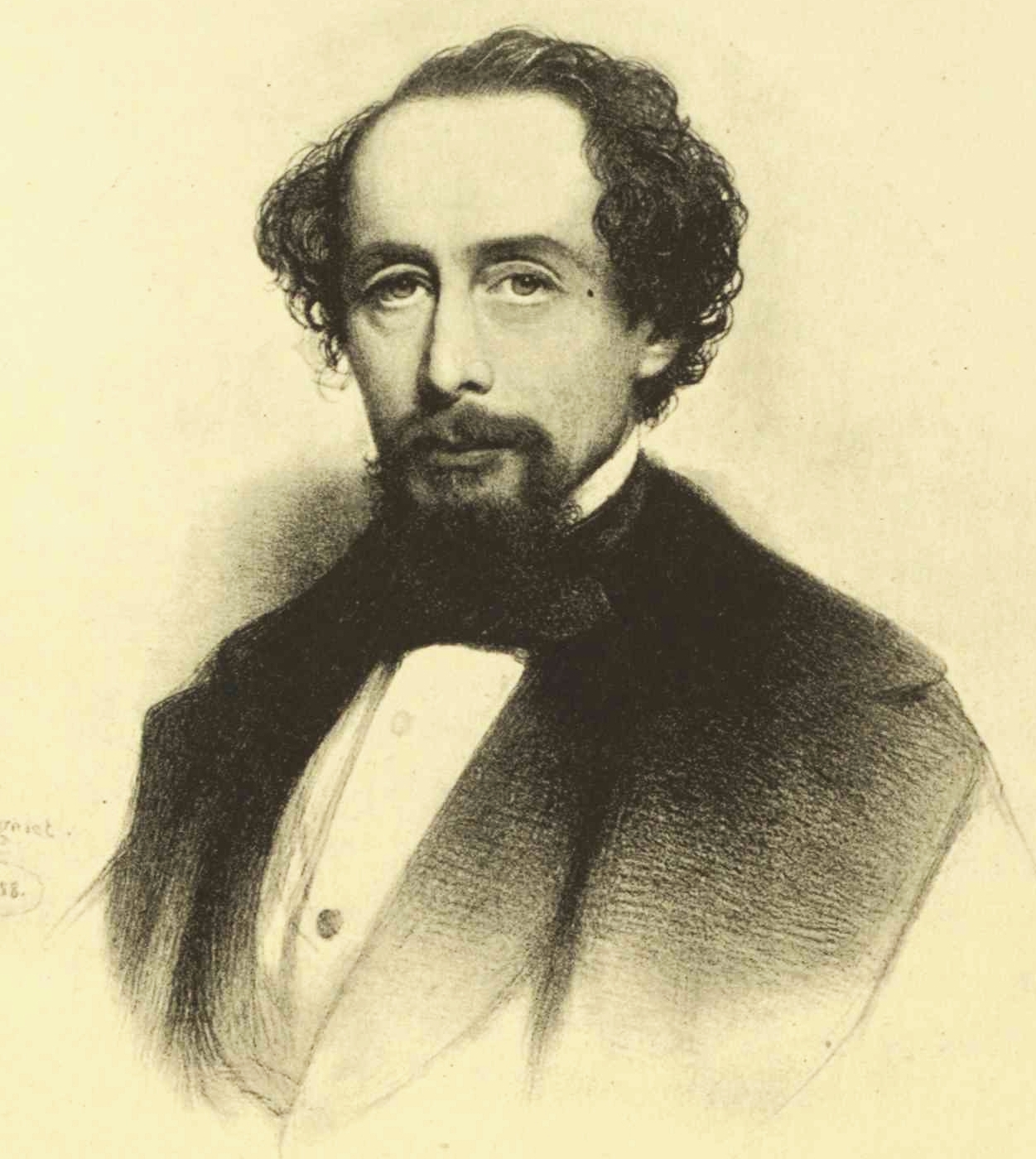
Charles Dickens:
The world's first blogger?
Dear Rich: I read your entry on whether you can register a blog name as a trademark. It's helpful but doesn't really explain how to register the name. Can you provide a step-by-step explanation for registering a blog name at the USPTO? It would be much appreciated. The Dear Rich Staff is here to serve. We posted this article explaining the registration process.

I Have Grey Aliens Copyright: Can I Get Trademark, too?

Dear Rich: I have two copyrights on alien dolls that I make, and would like to trademark the term, "grey aliens." Is this too much of a general term or since I have copyrights, would it be possible to get the trademark? The copyrights do not state the word "grey" in their content but, drawings sent for the copyrights do state that there are color changes. We think your aliens are very stylish. (We hope earthlings appear as stylish to extra terrestrials!)
The Greys! We assume you're aware that the term "grey alien" or "greys" is commonly used to describe extra terrestrials (though there is some dispute whether grey aliens are actually grey). So, we think you may be correct that this may be too much of a general -- or generic --  term to qualify for a trademark for your dolls (and no, your copyrights won't help).
The Examiner's Response. If you seek to register the trademark, a trademark examiner might consider the term to be merely descriptive (generic). That is, the term "grey aliens" is used to represent a type or class of doll product and does not distinguish your dolls from others in that class. If that is the case, you'll receive a substantive rejection for your application and you'll need to convince the examiner that consumers identify the name with you and not with a class or type of product. Alternatively, an examiner might consider your mark to be weak (or descriptive) in which case you would need to demonstrate more than five years of sales or other evidence of consumer associations. It's also possible that your application might fly through the USPTO without objection (that occasionally happens). One suggestion to improve your chances is to consider personalizing the term, for example, "The Grey Family" or naming the aliens, for example, "Dorian" or "Jennifer" (and don't forget the alien dog doll, "The Grey Hound").