Dear Rich: So, I have a friend that sampled a beat with Johnny Cash. It's a hip hop beat and I asked if I could use it to rap to. I asked him about legalities which apparently he knows nothing about. He mentioned another guy was rapping to it also and making money and just to give him some credit and he'd be fine. I don't know how hard it is to get some kind of "cleared" status on the song, but my question is if there was a problem who would get it in trouble, the beat maker, or the singer? If the copyright owners learned of your use, both of you. Record labels and music publishers usually take the attitude, "Sue everyone. We'll sort it out later." If substantial revenue was generated by the unauthorized use, the person who earned that revenue would of course be the most "promising" target.
What are you doing wrong? Start with the premise that both of you are infringing: the beat maker made an unauthorized derivative sound recording and may have infringed the underlying composition. The singer would be providing an authorized performance and (if duplicating copies), unauthorized reproductions. Of course, whether anyone hears your sample, recognizes it, and bothers to pursue you is another matter. If you're simply using it to perform locally, or handing out some privately-pressed CDs, we think it's unlikely to cause a problem. But once it reaches a national stage and things go viral, things would likely change. (As you can imagine, it's tough for an independent artist to get sample clearance.) We've written an article explaining when clearance is needed, and another article explaining how to get sample clearance. We've also talked about sampling law in previous posts: check out the basic rules and some recent cases. Our Music Law book also describes the ins and outs of sample clearance with all the required forms and contracts.
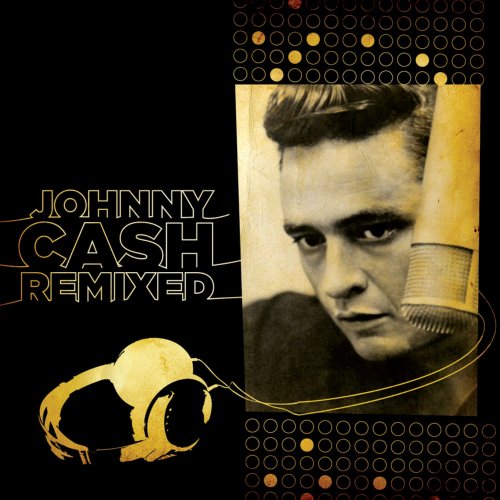
He walked the line. BTW, Johnny Cash has been the subject of authorized hip hop remixes and unauthorized releases, as well.
Showing posts with label sampling. Show all posts
Sampling: Comparing Beasties and George Clinton
Dear Rich: I am a music publisher and have a sampling question. How would you describe the essential difference between the opinion in Newton v. Diamond as compared with Bridgeport Music, Inc. v. Dimension Films? If Bridgeport had been decided first, would the judge in Newton be obligated to render a different decision? No, the Dear Rich Staff doesn't think so. The two decisions referred to are both sampling decisions but they actually address two different issues. Sampling music usually involves two copyrights: one for the songwriters (the musical composition); and the other for the arrangement, production and recording of the musical sounds (the sound recording copyright). The record company usually owns the latter, a music publisher usually owns the former.
Newton: A Lawsuit Over the Musical Composition. In Newton (the case involving the Beastie Boys' use of a James Newton flute sample), the Beasties paid for a license to use the sound recording, but they did not obtain a license to use Newton's underlying composition. When Newton sued, the court ruled that the borrowing of the composition was de minimis (too small to matter).
Bridgeport: A Lawsuit Over a Sound Recording. In Bridgeport (in which a film company used a George Clinton/Funkadelic song sample in a movie soundtrack), the defendants were sued solely over the failure to obtain the sound recording license. The court asked the same question as you, and answered as follows:
Newton: A Lawsuit Over the Musical Composition. In Newton (the case involving the Beastie Boys' use of a James Newton flute sample), the Beasties paid for a license to use the sound recording, but they did not obtain a license to use Newton's underlying composition. When Newton sued, the court ruled that the borrowing of the composition was de minimis (too small to matter).
Bridgeport: A Lawsuit Over a Sound Recording. In Bridgeport (in which a film company used a George Clinton/Funkadelic song sample in a movie soundtrack), the defendants were sued solely over the failure to obtain the sound recording license. The court asked the same question as you, and answered as follows:
"[This case] raises the question of why one should, without infringing, be able to take three notes from a musical composition, for example, but not three notes by way of sampling from a sound recording. Why is there no de minimis taking or why should substantial similarity not enter the equation. Our first answer to this question is what we have earlier indicated. We think this result is dictated by the applicable statute. Second, even when a small part of a sound recording is sampled, the part taken is something of value. No further proof of that is necessary than the fact that the producer of the record or the artist on the record intentionally sampled because it would (1) save costs, or (2) add something to the new recording, or (3) both. For the sound recording copyright holder, it is not the "song" but the sounds that are fixed in the medium of his choice. When those sounds are sampled they are taken directly from that fixed medium. It is a physical taking rather than an intellectual one."Mental, eh? Unfortunately for musicians the takeaway is that based on Newton and Bridgeport, all sampling of sound recordings requires permission, whereas some sampling of compositions is excusable. We can't say we agree.
Can We Sample Tequila? The Song That Is ...
Dear Rich: I am representing a band that has written a song that uses 4 seconds of the song "Tequila" in a break. The song is not sampled, but rather the melody is played by the lead guitar and the word "tequila" is sung once. The band expects to release the song for widespread commercial use. I have already determined that "Tequila" is protected by copyright and the publisher is registered with BMI as I recall. Do we need to get a license or sample clearance? Is there a fair use or some other exception that might apply? The good news is that you haven't sampled the Tequila recording. That eliminates the pesky issues raised by the 6th Circuit in this harshy-harsh sampling case. (They proclaimed that all digital sampling required a license no matter how short or inaudible the sample!)
Analog Not Digital. Since you're not doing any digital sampling, we think you're in a better position to go without permission and claim two defenses:
- the de minimis defense. Four seconds of Tequila is not an infringement because the use is so minimal, or
- the fair use defense. You are using the song for transformative purposes (perhaps commenting on Tequila's retro-classic cultural significance, or referencing Tequila to make a point about alcohol consumption.)
Subscribe to:
Posts (Atom)