
Can I Use Ex-Employer's Customer List?
Somebody Took My Dot-Org


The skinny on TLDS. When top level domain names (TLDs) such as .com, .org, .gov, .net, and .edu were created by the Internet Corporation for Assigned Names and Numbers (ICANN), the intention was that each TLD would cater to a specific type of domain name holder. For example, .org was intended for nonprofits, and .net for network related entities. But only some TLDs are really restricted--for example, .edu for educational institutions, .gov for government agencies, and .mil for military agencies. To get one of these you must qualify. But that’s not the case with .org, .net, and .com. all of which can be obtained freely by just about anyone, for any purpose.
What can you do about the interloper? If someone has taken your company’s trademark and is using it in bad faith to compete against your business as a .org, you can either sue for cybersquatting in U.S. federal court (very expensive), or you can request ICANN arbitration (approximately $1500 if you use only one arbitrator). We discussed cybersquatting in a recent post.
P.S. Coming Soon: Custom TLDs. ICANN has announced that companies can – commencing January 12, 2012 -- buy custom TLDS. For example, Nike can buy exclusive rights to .NIKE and Apple can buy .APPLE. Supposedly these custom domains will sell for $185,000, so it's for serious players only.
2012 Mehndi Styles
2012 Mehndi Styles
2012 Mehndi Styles
Best Mehndi designs 2012 for indian and pakistani girls
2012 Mehndi Styles
Best Mehndi designs 2012 for indian and pakistani girls
 |
| Arabic Mehndi Designs 2012 |
 |
| Stylsih Mehndi Designs for Legs 2012 |
 | ||||
| Best Mehndi Designs 2012 |
Can We Use Cars in CD Cover Art or Movie?
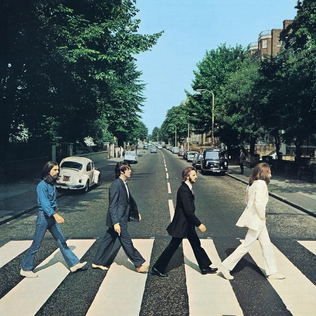
The Abbey Road Cover. The image of a VW on the Abbey Road cover (above) is unlikely to trigger any trademark issues because the usage is primarily editorial -- that is, it's an incidental use and no particular attention is drawn to the car. Of course, at the time, fans saw hidden meanings in the presence of the car (Beetle = Beatle) but it turns out the car was simply a vehicle owned by someone in a nearby flat. (BTW, the license of the car was stolen soon after the album came out). If consumers were likely to be confused into thinking that Volkswagen (or any other car manufacturer whose vehicle appears on the street) endorsed the Beatles (or vice versa), the car company never saw fit to take action. After all, if the world's most popular band at the time is including your product on a popular album, that's not something you're likely to complain about. (In general, it was a less litigious world back in 1970.) BTW, an editorial use of a trademark -- for example, a picture of a Ford truck in a documentary about trucks -- is not infringing.
Herbie and VW Marks. As for Herbie and the Love Bug movies, Disney removed the name and logos (scroll down) from Herbie in the first movie in the series. Apparently the company was concerned about claims of trademark infringement. But several years later when the sequel appeared (Herbie Rides Again) in 1974, VW sales were down and the VW company insisted that Disney put the trademarks and names back. (The names and marks stayed on Herbie for the subsequent four Love Bug sequels.)
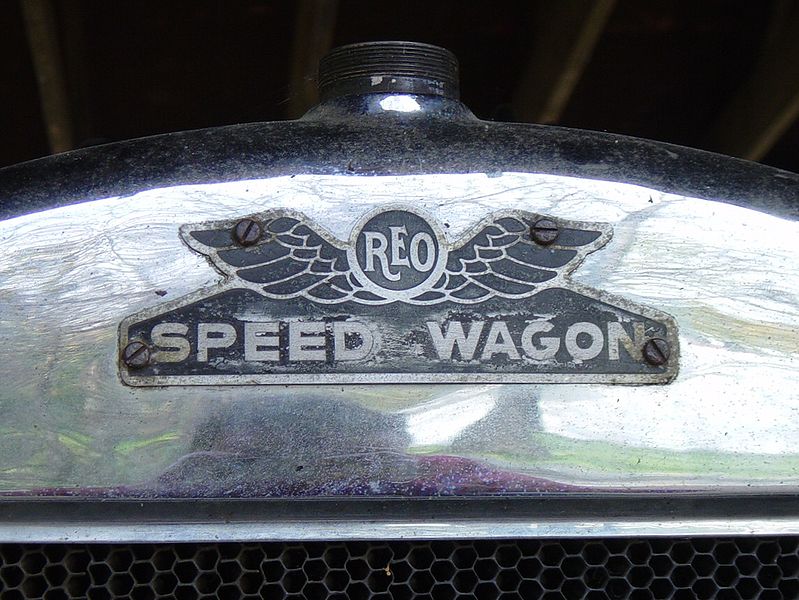
As a general rule, you want to avoid making people think the car company is affiliated or endorses your product or service -- for example, calling your band Miata -- or diluting a famous mark by tarnishing its reputation in a commercial context. However, we also note that there's plenty of leeway in these standards as the Caterpillar company found out when they tried unsuccessfully to prevent the use of their villainous tractors in a George of the Jungle movie.
Will Disclosure Docs Help Under First-to-File?

Right, you had a question. Yes, disclosure documents might be helpful in the soon-to-come "derivation hearings" -- a process whereby the true creator of an invention is determined. However, if you are referring to the government's official Disclosure Document Program, that's been discontinued and so would not be available when first-to-file (and derivation hearings) kicks in on March 16, 2013. Patent it Yourself author David Pressman agrees with you that a record of conception and testing will be vital in a derivation proceeding, but in the absence of disclosure document filings, inventors will have to keep their own records. By the way, we've posted a series of articles on invention ownership issues at our Patents and Business site.
Midwinter Style
Chilly weather can be the fast-track to a fashion rut. Cozy boots, long coats and dark colors galore define winter style, but lately, they seem like external manifestations of severe seasonal affective disorder. That's no fun. I stumbled across two options for spicing up cold weather wear:

2. Khakis: If winter's mild (read: not Chicago, but maybe New York), khakis are such a cute and unexpected alternative to denim and knit tights. Pair them with a short wool jacket and booties. Plus, I feel like so much winter style has a black or navy palette—brown's a little more fresh. To avoid looking like you're confused and think it's still October, make sure everything else is a warmer, darker tone.
Which look do you like best? (I'm all about #1 myself).
[photo cred here and there]
The Wildy's World Top 40 albums of 2011
Yes, we're on the cusp of a new year, with new experiences out in front of all of us. But before the tide turns again, let's take a look back at the top 40 albums we reviewed on Wildy's World during 2011. No big fanfare or drawn out countdown this year. Just the facts, ma'am.
| Rank | Artist | Title |
| 40 | Amy Black | One Time |
| 39 | Anna Atkinson | Mooniture |
| 38 | Monika Borzym | Girl Talk |
| 37 | Andy Statman | Old Brooklyn |
| 36 | Ron Sexsmith | Long Player, Late Bloomer |
| 35 | Jeneen Terrana | See The Light |
| 34 | Hannah Miller | O Black River |
| 33 | Gattis | E.P. |
| 32 | OST | Catch Me If You Can - Original Broadway Cast |
| 31 | Laura Roppe | I'm Still Here |
| 30 | Renee Wahl | Cumberland Moonshine |
| 29 | OST | Anything Goes - New Broadway Cast Recording (2011) |
| 28 | The 23 String Band | Catch 23 |
| 27 | Beth Bombara | Wish I Were You |
| 26 | Tally Hall | Good & Evil |
| 25 | Imelda May | Mayhem |
| 24 | Sarah Jarosz | Follow Me Down |
| 23 | Eric Church | Chief |
| 22 | Sutton Foster | An Evening With Sutton Foster: Live At The Café Carlyle |
| 21 | Forrest Day | Forrest Day |
| 20 | John Shipe | Villain |
| 19 | Abbie Barrett & The Last Date | The Triples: Volume I [EP] |
| 18 | Mark Erelli | Little Vigils |
| 17 | Jason Plumb And The Willing | Alive & Willing |
| 16 | Skyler | Take You Away |
| 15 | Zaz | Zaz |
| 14 | Sierra Hull | DayBreak |
| 13 | Shayna Zaid & The Catch | Lighthouse |
| 12 | Seth Glier | The Next Right Thing |
| 11 | Jeannine Hebb | Whileaway |
| 10 | Bruce Cockburn | Small Source Of Comfort |
| 9 | Bess Rogers | Out Of The Ocean |
| 8 | Grace Stumberg | To Whom It May Concern |
| 7 | Sunday Wilde | Whay Man!? Oh That Man!!! |
| 6 | Emmanuella Grace | London Stories |
| 5 | Tommy Shaw | The Great Divide |
| 4 | Brandon Schott | 13 Satellites |
| 3 | Marian Call | Something Fierce |
| 2 | Paul Simon | So Beautiful Or So What |
| 1 | Ron Hawkins | Straightjacket Love |
A New Year

But for 2012, I don't even know what I should resolve to do. There's been so much change in 2011 that I'd appreciate some sort of stasis in the next year. My life was turned upside-down: I left Evanston for a NYC (read: miniscule) apartment surrounded by pigeons and litter, somehow landed a wonderful job for which people pay me to write (I know, right? And you're getting this for free!), and my best friends either moved to Africa or stayed in Chicago. Do you know what it's like when your best friend is in the Tanzanian jungle? It feels horrible. I don't wish it on anyone but my very worst enemies.
So I'm just going to do what I should have been doing anyway. I'm going to floss because my dad's a gum surgeon who went on a long lecture about gingivitis the last time I let him look at my teeth. I'm going to keep my network of scattered friendships as close as possible, given the circumstances. And most of all, since I already have that New York City shoebox, I'm going to explore the city. Really, really explore it. This means walk outside the radius between my apartment and my office.
Hope you have the happiest New Year ever!
[photo cred here, here, and there]
Does Provisional Trump Regular Patent Application?

Would the outcome be any different under the America Invents Act? On March 16, 2013, the U.S. switches to a first-to-file system. Under that system, the first inventor to file gets the patent. So, the outcome would likely be the same as your provisional patent application would be considered the first filing. Again, that's assuming your provisional patent application accurately reflected the invention claimed in your regular application.
Adam Cross - Sirens

Adam Cross – Sirens
2011, Adam Cross
2011, Adam Cross
Aiken, South Carolina singer/songwriter Adam Cross has seenhis heartbreak. This is evident on Cross’self-released debut album, Sirens. Whether you take the title as a warning, orperhaps as a treatise on the things that draws us out of ourselves (andsometimes pushes us back in), Sirensis a remarkably mature and subtle disclosure of vulnerability and strength,healing and pain.
Sirens opens withthe pure pop rock of “Dance”, a catchy-yet-reserved statement of intent that isthe perfect intro to Sirens. Cross has an appealing voice; staying withina comfortable range that doesn’t restrict his ability to deliver a quietlydynamic performance. “A Feeling” is amelancholic reflection on love as faith, in a love that, if not requited,certainly isn’t available. Cross buildsthe song nicely throughout, growing in intensity through the final bridgebefore drawing back. “Scared To Pieces”is a love ballad written from a less than tenable romantic position. The smooth, radio-ready chorus is full ofsound and sonically appealing. Cross isreminiscent of an edgier Rob Thomas here, both for his sound and for his pop sensibilities.
Cross engages in a confessional style on the stripped-down“Save Me”, punctuating the effort with a jump into his upper vocal register onthe chorus. This last leaves him a bitexposed with a sound that’s less than ideal, but the song has great flow andworks on many levels. “Time Of OurLives” is a wonderfully upbeat love song, although the verse has a stilted feelthat’s somewhat distracting. Theexecution here doesn’t quite match the intent, but it’s a solid, pop-friendlyeffort. “Thursday” is a song of loss,written through the perspective of time, although Cross’ deliberate vocal styleoffers the impression of a suitor who is choosing his words carefully. He’s still in love, you see, and still pursuingher even if he isn’t certain what it is he wants from the pursuit. There’s a stylistic grace to this song thatworks, even with its somewhat awkward pace, as he struggles with the competingfeelings of love and hatred.
“Burning Castles” wants to a big pop/rock song but neverquite lives up to its pretensions. It’sa solid tune, but just never fully becomes. The chorus is mildly catchy, and Cross builds the musical tensionappropriately, there’s just never a payoff. “Time Wasted” laments a relationship that didn’t work out, seen again,through the lens of time. This one has anice, Adult Alternative sound that will play well with radio programmers andfans alike. “Tragedy” finds Crossintroducing more of an electronic element into the arrangement. The result is a somewhat uninspired soundthat seems ripe for pop radio but fails to live up to either the melodic orcreative potential Cross seems to possess. Sirens closes with “Lost”, asix-minute acoustic number that’s among the best on the album. There’s a prayerful melancholy that pervadesthis number, as Cross laments both a past lost and a seeming lack of future. The chorus is gorgeous and slow, dressed indark musical timbres.
Adam Cross impresses with Sirens, even if he doesn’t always hit his mark. There’s a distinctive musicality in Cross’songwriting that has an edgy, Indie-feel, yet a melodicism that pop sensibilitythat make him accessible to the commercial market. Musical melancholia fans will enjoy Cross’tales of love lost, just missed or never gained. All of this is delivered without a sense ofself-pity, but rather with a clinical eye that has assessed the past andpresent, and in spite of the pain, taken something of a logical approach toeach heartbreak. If Sirens is any indication, there are great things to come from AdamCross.
Rating: 3 Stars(Out of 5)
Project Progress: the RestoBar
so i have been working on this project for quite some time now, and construction will start as soon as the holiday has finished :)
Reality is, you can squeeze your brain out every time you have to design for something but you also have to consider the (1) Budget (2) Market (3) Period of Lease (4) Maximum Capacity (5) Kitchen Space (6) Food/Drinks that will be served etc. etc. so restraining one's self should be observed.
Initially, we had to go Modern + Minimalist since the idea was to mix Asian + Western (Burgers +Milk Tea + Beer at night) so I had this in mind...


 I was already excited with the execution of the design, but after some thoughts the partners decided to skip with the "Milk Tea" and go straight with "Burgers + Bar + Beer". So I have to revise everything again (STRESS- was already done with the elevations, rcp, and shop drawings, but ohwell :)
and this is what we have agreed upon to :)


 I'm already excited (and scared) at the same time with the outcome of this project :) We would be expecting that the Opening would be before Valentine's Day :) But after meeting with the contractors and clients again, we have to expect some changes... cost-wise. But anyway, I hope its nothing major, and I hope it would still look great with the revisions of materials and some layouts they were suggesting. But as always, whatever the client says, stays. And our role as designers is to help clients get what they want, not ours (unless given the opportunity, why not :)
but for now, i have to enjoy the Holiday and will keep you posted :)
Happy New Year Everyone :)
Reality is, you can squeeze your brain out every time you have to design for something but you also have to consider the (1) Budget (2) Market (3) Period of Lease (4) Maximum Capacity (5) Kitchen Space (6) Food/Drinks that will be served etc. etc. so restraining one's self should be observed.
Initially, we had to go Modern + Minimalist since the idea was to mix Asian + Western (Burgers +Milk Tea + Beer at night) so I had this in mind...

Moodboard: White Brick walls, Cement finish, Oak Wood, Tom Dixon inspired drop lights, and suspended bulbs...
And another option with the flooring and walls...

And here was the Layout...

and this is what we have agreed upon to :)

Some items were retained, but the furniture went from Modern to Masculine. Also the ambiance got a little rustic and old-feel. While the suspended light accents MUST stay :)

Then Option 2 without the divider between the bar and booth seat :)
but for now, i have to enjoy the Holiday and will keep you posted :)
Happy New Year Everyone :)
Can I Reproduce Images From Crystal Bridges Museum?
 Dear Rich: I live near Crystal Bridges, America's newest art museum. Crystal Bridges is the brain child of Wal-Mart Heiress, Alice Walton and is a billion dollar museum. We here in Northwest Arkansas are so excited to have access, free access in fact, since the museum has been given an endowment by Wal-Mart that will allow the non profit museum to be forever free to the public, to see great American art from colonial times to the present. Many of these artworks are early works (pre 1923) and are part of the public domain. I have a new website I’m developing for public domain images. Crystal Bridges allows photographs to be taken of the art as long as a tripod or flash is not used. However, their photography policy states that photos of the art are only to be used for personal use. I take this to mean that they can not be used on my site which shares images with the whole wide web world. Am I correct in my assumption that they don’t have the right to restrict the use of my photographs of their public domain artworks? I am not trying to claim copyright of the photographs, since they will be merely reproductions of public domain works. Whether you can reproduce imagery that's in the public domain really depends on one thing: Did you enter into an agreement with the museum not to reproduce the images? You're probably thinking, "I didn't enter into any agreements with Crystal Bridges." But obtaining an admission ticket, if the ticket contains certain terms and conditions, may qualify as the type of agreement we're talking about. This may seem incredibly creepy -- to condition admission into the museum based on your promise not to reproduce public domain imagery -- but it's not uncommon in the copyright world and these so-called licenses are generally enforceable. Here's what public domain expert Steve Fishman has to say about the practice in his excellent public domain guide.
Many copyright experts believe that licensesimposing copyright-like restriction on howthe public may use public domain materialsshould be legally unenforceable. This isbecausethe federal copyright law preempts(overrides) state contract law and preventspeople from using contracts to create theirown private copyrights. Moreover, thereare sound policy reasons for holding suchlicenserestrictions unenforceable—theirwidespread use diminishes the public’saccessto the public domain.However, almost all courts have ignoredthe experts and enforced these licenses.What's a valid license? To have a valid license, you and the museum must assent to the terms and conditions, typically at the time when you enter. If the admission ticket contains no restrictive provisions and you never assented knowingly to such conditions, there probably is no license in place. For example, it's unlikely that an after-the-fact assertion of rights -- a sign on the way out of the museum that tells you that you cannot reproduce the imagery -- is legally enforceable as a contractual license.
What about the Crystal Bridges website? Each page of images at the Crystal Bridges website contains the statement:
Works of art in Crystal Bridges' collection are protected by copyright and may not be used without permission. For more information visit Rights and Reproductions.That sounds foreboding but we're not sure that statement creates a binding license. It reminds us more of a tip jar, left in view in the hopes that its presence will trigger a hoped-for result. The museum would have a much stronger argument that its terms and conditions are binding if the user had to assent to these terms and conditions -- that is, click a "Yes, I Agree" button to access the works. The fact that the site includes "copyrighted" photographs of public domain artworks also doesn't affect your ability to copy and reproduce that artwork. Courts have held that "slavish copying" of public domain works does not make the photographs protectible under copyright law. Although we're not a betting blog, if we had to bet, we'd place our money on the fact that currently public domain images at the site can be copied and reproduced without permission.
One last thing. Just because a painting was created before 1923 doesn't mean it's in the public domain. It must have been published before 1923. You may be surprised to learn that displaying a painting in a museum, for example, does not amount to publication. Publication (scroll down) refers to reproduction of the image, for example in a magazine, post card, or book. To learn more about these tricky public domain rules, check out Fishman's tome.
One other last thing. We're not encouraging you to get chased by the museum and we appreciate the fact that great art is being made available to the masses at no charge. But is it really free? The driving force behind these efforts to restrict reproduction is a desire to jack up gift shop sales and generate licensing revenue. We hope the museum rethinks its desire to reclaim and restrict rights to artwork that our government has designated to be freely available to the public.
Can I Use Artwork Created from Coloring Books?

How do you get permission? The copyright is likely held by the Ruth Heller Trust Fund but we think the place to start your request is with Grosset and Dunlap/Penguin Putnam Books for Young Readers, the publisher. They have an online permission system and a set of FAQs explaining the process and their online database indicates they control about a dozen Ruth Heller books. If the coloring book you are using is not covered, perhaps G&P can lead you to the proper source or to the trust.
Can you use it without permission? We think including one or two images (with proper attribution) would probably not trigger a cease and desist letter. Although the copyright pages of the coloring books don't specifically grant permission for uses like yours, a coloring book is an implied invitation to create a derivative work. It can also probably be argued that the sale of a coloring book implies a limited right to post and reproduce the resulting "colored-in" works. And for what it's worth, the company has not objected to the posting of colored-in versions of their imagery at Amazon. Again, we can't guarantee that the copyright owner won't object to your use, but it's difficult to imagine that they would.
Jeremy Schonfeld – Iron & Coal

Jeremy Schonfeld –Iron & Coal
2011, Jeremy Schonfeld Music
2011, Jeremy Schonfeld Music
Growing up in a family of Holocaust survivors, JeremySchonfeld has a different perspective on life than many Gen-Xers. His understanding of the world around him isshaped by the tales of suffering of an entire generation of European Jews atthe hands of Nazi Germany. This darknesshas occasionally entered into his songwriting over the years, but Schonfeld hasshown a remarkably bright side as well. His musical Drift (writtenwith Craig Pospisil) had a two-year run at the New York Musical Theater Festival. He is also a founding composter and lyricistsfor A-Train Musicals. Schonfeld’sperformance style is enigmatic and powerful, as audiences at such venerated NewYork venues as Joe’s Pub, Birdland, B.B. King’s, CBGB’s and Lincoln Center havecome to know. Schonfeld’s must recentwork, Iron & Coal, is his mostpersonal to date, however. It is arecast of his father’s memoirs of Auschwitz; a highly personal and powerfulstory born of his father’s experiences, his own emotions, and that fine linebetween fact and art that breeds the best of stories.
Schonfeld himself is an enigma. If Gordon Lightfoot had gone into musicaltheater instead of folk/rock they’d sound quite similar. Whatever imperfection you might perceive in Schonfeld’svoice become a part of his larger persona, i.e. Randy Newman or Bob Dylan. The theatrical flair in his songwriting isalso never far from the surface. Schonfeld knows how to create moments in song. Opening with “I Gotta Song”, Schonfeld offersup an exultant and beautiful prayer of thanksgiving for “borrowed time”. The song is in movements like a classicalpiece, but is a folk/pop/Broadway blend than runs nine minutes without everfeeling tired. “Story Of Love” is aninspired tune that thrums with Schonfeld’s persona. This is a true performer’s moment that makesyou wish you could take in the song from the third row of a concert hall withthe lights low and just Schonfeld and a piano on stage. “The Mourner’s Kaddish” opens in Hebrew butturns into story-song full of the oft-complicated love of a song for hisfather. Love and the drive todifferentiate are at war here, but it’s not the sort of battle that does harmto anyone other, perhaps, than the one writing it. It’s a powerful tune that will cut deep forthe male listeners in the audience.
“Dead Beat Heart” finds Schonfeld moving more into a 1980’srock sound. Big guitars and even biggermelody are built around a mellow groove for a very enjoyable listeningexperience. “Good Stuff” is a rock androll party song, pure and simple. Verycatchy and danceable, this one is likely to become a guilty pleasure for fansof Kim Mitchell of Cheap Trick. “SaveMe” is an angry and argumentative number that asks for succor but seems tofight it with every note and every word. Schonfeld uses the percussion here to give the song a deeply unsettledfeel – a theatrical contrivance that’s quite effective. “Yedid Netesh – Good Man” fades quickly intothe glam, funk and soul of “Bad Man”. While the song itself is catchy and entertaining, Schonfeld’s backupsingers provide the perfect counterpoint that makes the song fly.
Schonfeld is emotionally lost on “Piece Of Me”, a solidpiece of pop/rock songwriting that is sonically pleasing: a high quality albumtrack that holds its place by advancing the story and very quietly holding moreof your attention than you might at first expect. “Nothing Really Matters – Stop, Stop” begins asa musical soliloquy and turns into a frenetic rockers. This one will get stuck in your head with itsmanic feel. “If Ever” opens with anintriguing pizzicato string arrangement and turns into one of the bestnon-traditional ballads to come out of 2011. Don’t be surprised if this song gets covered many times over down theroad. “Time”, the penultimate track onthe album, advances the story, but feels like its simply holding place. This isn’t inappropriate in the story line,but it is something of a pause musically that’s simultaneously distracting andpossibly necessary to the story line. Schonfeld brings down the curtain with “Yet”, a song of self-convictionabout moving forward and remember that things will somehow be okay. It’s a quietly powerful moment that exploresthe resilience of human heart in the wake of inescapable tragedy, wrapped up ina stunning arrangement that’s perfect for the Broadway stage, but easilytransmutable to the pop/rock/folk world.
Jeremy Schonfeld lives on the edge of death for much of Iron & Coal, but like hisprotagonist he truly lives. The factthat the lines at times become blurred between protagonist and story-telleronly makes the story more powerful. Schonfeld’s compositions are golden – everything flows as if time itselfwere the driver. You could easilyimagine this cycle being reworked into a show, although it perhaps flows bestas it is. A successful musicalpresentation would force too many changes, but as a single work of art, Iron & Coal is a thing of beauty.
Rating: 4.5 Stars(Out of 5)
Learn more about www.jeremyschonfeld.com or www.facebook.com/jeremyschonfeldmusic.
Making Merchandise from Video Game Characters

How do other people get away with it? It's a matter of odds. The owners of valuable character properties usually put their resources into pursuing the bigger fish, and for the most part, that often bypasses individual sales at Etsy or eBay. So, unless the trademark owner is intending to make an example of a small fry infringer, a cease and desist letter may be sent, and that's sometimes the end of it.
What should you do? We wish it wasn't frustrating to get permission. Like, wouldn't it be great if you could pay "per impression" for reproductions of licensed characters. Of course, that may blow any standards of quality ... but hey, merchandise happens. Anyway, infringement is always a gamble and we'll leave the risk assessment to you.
Snafu Caused Loss of Domain Name: Now What?

Is it cybersquatting? Cybersquatting is when someone buys and sells a domain name with the bad faith intent to profit from another company's trademark. (We explain it in more detail, here.) For example, it would likely be cybersquatting if (1) the company set up a site that diverted your customers, (2) the company, in advertising the domain name for sale, mentioned that the potential buyer could trade off your previous traffic, or (3) the company set up a page with Google Ads listing you and your competitors. If the company contacted you, unsolicited, after buying the domain and offered to sell it back to you at a much higher price, that would likely be cybersquatting, too. It would not be cybersquatting if the company set up a non-competitive site for another company or if the company did nothing but set up a blank page. That's because there's no proof of bad faith intent. After all, it's not illegal to simply buy and sell domain names (without bad faith).
Should you proceed to ICANN? You are unlikely to get the domain name back by sending threatening letters. Most domain name dealers are not cowed by legal letters. They know you can only get the domain name back by (1) filing a federal cybersquatting lawsuit (probably way too expensive for you), or (2) by seeking domain name arbitration at ICANN. If you go the ICANN route, your filing expenses are, at minimum, $1500. It takes six months, requires a considerable amount of paperwork and documentation and may cost more if lawyers are involved. Remember, it's not enough to say that the company bought your domain name, you need to prove bad faith. And of course, there's no guarantee you'll prevail (although complaining parties prevail in 84% of the cases). Many people don't want the wait or the uncertainty of ICANN so they simply contact the new owners and pay for the domain name -- often forking over a sum between $2,000 and $3,000 because that's how much they would likely end up paying in time and money for an ICANN arbitration.
Can We Use European Poster?

Right, you had a question. The typical procedure for getting permission would be to contact the apparent owner of rights -- the Council of Europe -- and to ask for permission. Here's their contact information. Although the Council of Europe is a multinational organization -- a bit like the United Nations -- it can retain copyrights. For example, the Council of Europe is listed as copyright claimant for seven U.S. copyrights (although there is no registration for the poster). You can review their U.S. copyrights by searching at the Copyright Office. Click "Search the Catalog" and filter your search by "Name." If you can't get a response for your requests, document your attempts in the event that you decide to claim fair use. As we've indicated before, there are a line of cases that make thumbnail reproductions, whether in books or on the web, more likely to be excused as a fair use, especially when accompanied by commentary or criticism.
Does the VEOH Case Affect My Website?
Dear Rich: We're a web startup (a pre-startup, actually). Can you explain the effect of the recent VEOH ruling regarding website infringement? Wow, a pre-startup! That sounds hopeful!
The case you're referring to -- UMG Recordings v. Shelter Capital, Partners -- has to do with the level of policing required by a website when users post infringing content. Veoh, a site that permits users to upload video content, was sued by Universal Music, after infringing videos were discovered on the site. Veoh had complied with all requests to remove content and had used software to seek out and identify infringing content, but some infringing music videos still made it on to the site.
DMCA as a shield. Universal argued that Veoh (our source for the kitty video) must have known of the "apparent" infringements and should not be able to use the Digital Millenium Copyright Act (scroll down) as a shield. The 9th Circuit Court of Appeals -- the first appeals court to rule on this issue -- held that the burden was on Universal to report the infringements to Veoh, stating,"Copyright holders know precisely what materials they own, and thus are better able to identify infringing copies than service providers likeVeoh." The ruling doesn't shield websites from liability for infringement but it does permit websites to use the DMCA as a shield when the website has anti-infringement policies and has otherwise responded to all requests for takedowns.
Fur Better

[photo cred here]
Does Filing For Patent End NDA?

What happens after publication. Whenever the information is published, that information can no longer be protected as a trade secret and will not be subject to an NDA. That doesn't necessarily make your NDA "null and void." If other nonpublished information has been included as part of the NDA, that should still be protected. For more on the subject, check out our NDA site.
Subscribe to:
Posts (Atom)